
|
| Greg's diary |
| July 2010 |
|
|
||||||||||||||||||||||||||||||||||||||||||||||||||||||||||||||||||||||
|
|
|
|||||||||||||||||||||||||||||||||||||||||||||||||||||||||||||||||||||||||||||||||
| Thursday, 1 July 2010 | Dereel | Images for 1 July 2010 |
| Top of page | ||
| next day | ||
| last day |
|
FreeBSD file deletion without soft updates
|
Topic: technology | Link here |
Last month I noted the extremely long time it takes Linux to delete large files. It took nearly 30 seconds elapsed time to delete a 190 GB file, while FreeBSD does it in a few milliseconds. One hypothesis was that FreeBSD's speed was only due to soft updates, and there's some reason to believe that. Today was the first of the month and thus the time for my monthly level 0 dump of my file systems. I back up to disk, so I first needed to make space by deleting a number of large files, 36 GB in total. They're on a separate file system, so I was able to umount it, reset soft updates, mount it again and delete the files. I then set soft updates again, copied a similar backup and deleted it. Here the results:
No soft updates:
Soft updates:
So yes, it's much faster with soft updates than without. Interestingly, the processor time also drops to almost 0; I suspect most of the time is in non-process context, which time(1) can't measure. But the time without soft updates is about 0.062s per GB. For Linux (XFS) it's 0.63s per GB, 10 times as much. My (possibly inaccurate) recollection is that it was even slower with ext3. There's still something puzzling about the figures.
There are differences in the scenarios: I think my FreeBSD box is faster than the Linux box, though not much, and I was deleting a number of smaller files. But I don't think that that is particularly relevant. It's clear that the CPU time is not an issue in the equation (indeed, the slower Linux box used only 1.112s CPU time to delete 190 GB, while my faster FreeBSD box needed 0.800s to delete the 36 GB). The disks are effectively the same speed. I can't see any reason why it should be faster to delete a number of files than a single file of the same size; I'd expect it to be slower due to other overhead.
|
The last tree
|
Topic: gardening | Link here |
While walking around the garden, discovered that we had forgotten a tree to chop down yesterday, presumably a River red gum. Grabbed a handsaw and chopped it down (run the cursor over an image to compare it with its neighbour):


|
|||||||||||||||||||||||
Also spent some time removing the inordinate amount of grass that had popped up there. We should try to stay more on top of the weeding.
|
One-step HDR panoramas with Hugin?
|
Topic: photography, technology | Link here |
Hugin has a number of poorly documented features, one of which is the plethora of choices on the Stitcher page:

|
|
||||||||
It occurred to me that it would be nice to merge the “before” and “after” photos of the gum tree removal to get an exact view of the change. That should be possible with programs like align_image_stack, but my previous attempts with it proved to be less than successful. Some of the choices on the Stitcher page looked like they would do what I want.
If they do, I couldn't find it. But some of the other choices looked interesting, particularly “Merged and blended panorama”. Currently I do this in two steps: first I create HDR images of each view, and then I stitch the HDR images. It would be nice to do it automatically. Tried that with one of last Saturday's panoramas, without success:
Maybe I can drag out some more information about the topic.
|
Walking the dog
|
Topic: animals, opinion | Link here |
Out walking with Nemo today. You can tell that elections are coming; people are investing in infrastructure:

|
|||||||||||||||||||||||
It's not clear what that sign is supposed to mean, but I think the money would have been better spent removing flammable debris from the roadside. Of course, silly signs are popular round here; only 150 m or so further down the road there's another one that has been there for a while:

|
|||||||||||||||||||||||
That's on one of the many entrances to the Dereel lagoon. There's no other sign there, and you can go off in any direction from there. There's no other similar sign elsewhere. So where exactly are dogs and horses prohibited?
|
Projector EOL
|
Topic: multimedia, opinion | Link here |
Our Acer 530 data projector has just passed the 3000 hour lamp life limit, and almost immediately the light output has dropped dramatically—we could barely see anything any more. I bought it at a time when price was the primary objective, and it's not much of a projector—even Acer has completely forgotten about it—and I had never intended to replace the lamp. But what do we do now? In the short term it's simple: use the old Panasonic instead. The colours are terrible, but the image is bright enough. And then buy the 1080p projector I've been thinking about for years? I think I've changed my mind: nearly all the video we look at is 720p or less, and it's to be expected that a 720p projector will render 720p content better than a 1080p one. They're also cheaper and tend to be brighter. So tomorrow it'll be time to start another search.
| Friday, 2 July 2010 | Dereel | Images for 2 July 2010 |
| Top of page | ||
| previous day | ||
| next day | ||
| last day |
|
Dog run but no pond
|
Topic: animals, gardening | Link here |
The weather is dryer now, but not dry enough for Ron of Enfield Mini-Diggers, so he put things off—again—until Monday. CJ showed up, however, and spent the whole day working on the new dog run for Nemo. It proved to take longer than expected, and by evening we still weren't done. Hopefully Tuesday now.
|
Which data projector?
|
Topic: multimedia, technology | Link here |
Over the last few days I have gradually come to the conclusion: I need a 720p projector (1280x720), not a 1080p (1920x1080), since that's what the TV stations broadcast. Today spent nearly the whole day looking for a suitable projector. What I found was:
As I had expected when I bought the last projector, the standard projector now is 1080p.
Those 720p projectors still on the market are either old (such as the Panasonic PT-AX200E) or not really intended for home theatre use (such as the Epson TW450, which has a real resolution of 1280x800 and significantly higher noise levels).
A limiting factor for my particular application is the size of the room: it's not very wide, and there would only be about 3 m between the projector and the screen. Only some projectors can project an adequately sized image at that distance.
But which ones? I know my old Panasonic PT-AE700E can, and I downloaded the manual for the PT-AX200E, which confirmed that it had exactly the same parameters (probably the same lens as my 5 year old PT-AE700E). But what of the others? The documentation on the web sites has hit a new low. For example, the “spec sheet” for the Epson TW450 states:
| SCREEN SIZE (PROJECTED DISTANCE) | 33 to 318 inch [0.9 to 9.0m] (Zoom: Tele), |
| 33 to 317 inch [1.08 to 10.5m] (Zoom: Wide) |
What on earth does that mean? Our best guess on IRC is that the inches measurements are the screen diagonal and the metric units are the distance, which would mean that you can get a 33" display at distances between 90 cm and 108 cm (convenient metric values that presumably just happen to correspond to 3' and 3' 6"). What kind of mind can create that? A mix of units, inadequate description of the meaning, and a representation that requires significant calculations to work out what the size would be at a given distance. If I take that trouble, I discover a maximum diagonal of 2.8 m at 3 m distance. The Panasonics have 2.5 m, so that would seem OK. But is my guess correct?
This would be terrible enough if only Epson did it, but I've seen other manufacturers do it as well. Sure, you don't need a university degree to become a web master (I suspect it might even be a disadvantage), but this complete mess makes me wonder if mind-altering substances are a requirement. Wouldn't it be easier to say that at distance n the diagonal can be between 0.79 n and 0.92 n?
Projector bulb life is very variable. The Epsons offer up to 4000 hours, while the Panasonic PT-AX200E has a hard limit of 2000 hours, after which it refuses to work (OK, you can reset the life timer, but they warn about exploding bulbs, just as they did for my old projector).
Warranties are limited. Panasonic only has 1 year (particularly significant in view of the damage that happened to my old projector after about 18 months), and there are some interesting clauses: not more than 4 hours continuous use. This relates to the optical block, which is where my projector was damaged, so I assume the Panasonics have a weakness in this area. Epson has 2 years' warranty, and Sanyo has 3 (which according to Ausmedia also includes the globe), though their web site doesn't mention anything about the warranty terms.
By evening I still hadn't got much further. Did some experimentation and decided that 1080p projectors don't seem to have difficulties displaying 720p, so it might make more sense to bite the bullet and get an up-to-date projector than buy something that is no longer even state of the art.
Yet another issue with Panasonic became apparent in the evening. The X display didn't work; instead of 1280x720, I only got 640x480. Further investigation showed that the projector doesn't supply EDID information, and without mode lines X assumes that it can't use higher sync frequencies than VGA. This problem didn't hit us yesterday because the Acer projector was connected when I started X. Worked around that by reconnecting the Acer projector, starting X and then swapping projectors. Here the relevant diffs from /var/log/Xorg.0.log:
In addition, I was reminded the hard way that the projector can't synchronize to the frequencies that FreeBSD uses for the console, which is slightly higher than normal VGA. I doubt that they have invested much in the newer 720p modes. There are clearly enough reasons not to buy a PT-AX200E: limited warranty, poor compatibility, previous reliability issues, low lamp life and relatively high price. The cheapest price I found for one is $1970; for $2170 I can buy a Sanyo PLV-Z700 1080p unit with three years' warranty and a short-focus lens slightly better even than the Panasonic. About the only down side (apart from the fact that I didn't really want a 1080p) is that the lamp is relatively dim at 1200 lumens. But that's still brighter than the Panasonic I have now (1000 lumens).
|
Linux.conf.au in Ballarat
|
Topic: technology | Link here |
The Ballarat Linux Users Group is interested in hosting linux.conf.au in 2012. That's quite a challenge: so far it has only been hosted in big cities. The smallest in Australia was Hobart, with a population of 220,000, and that proved a problem at the time. Ballarat has less than 80,000 inhabitants. That reflects itself in the number of people available to organize the conference, and also in the range of venues which we could use. This evening Josh Stewart organized a first meeting at the Thai Sala Pavilion Restaurant in Sturt Street. As recently at my weather station presentation, the size of the town was evident: we had only 5 people, one of whom still needs to develop the sense of responsibility needed for such an event:

|
|||||||||||||||||||||||

|
|||||||||||||||||||||||
Still, I think we should be able to manage it.
| Saturday, 3 July 2010 | Dereel | Images for 3 July 2010 |
| Top of page | ||
| previous day | ||
| next day | ||
| last day |
|
Second week of dog training
|
Topic: animals | Link here |
Into Ballarat again today for the second week of Nemo's training. Socialisation, reinforcement of what he learnt last week, lots of questions, including control and pecking order, and relatively little new stuff. We're making good progress, Ian says, but young puppies are still quite a handful.

|
|||||||||||||||||||||||

|
|||||||||||||||||||||||

|
|||||||||||||||||||||||
Ian doesn't miss much. He saw the tiny scratch that Nemo got from the neighbour's dog and asked what happened. When we told him, he said “what kind of dog?”. I told him it was a golden retriever, and he said “He'll remember. One day he'll be big, and that dog had better watch out”. I wonder what will happen there.
|
Digital devices: data moves the world
|
Topic: technology, opinion | Link here |
We're still playing around with the navigator, which from time to time asks us to go ways that we wouldn't normally take. Today we tried some of them; it's not clear whether they're better, but it's probably worth trying it out.
One of the problems is data accuracy. On the way into town, at one point we were told to turn second left. Only one street. Drove past and were told “Recalculating”, in other words, “you blew it”.
On the way home we stopped off in Napoleons at the little roadside plant sales place. Didn't buy anything, and since we were about 50 m from the main road, we should have turned around and continued on that road. But the navigator wanted us to continue over a kilometre and take a right turn into this road:

|
|||||||||||||||||||||||
It's not clear why: it's clearly longer than turning back. Possibly it had other tricks up its sleeve. Clearly a navigator can only be as good as the map data, and this is deficient. But it reminded me of a recent Microsoft advertisement in issue 10/2010 of c't, with a claim:
In English, that's “Code moves the world”, and at the time I marvelled at the stupidity, though it's in line with my experience with Microsoft MUAs. Looking for it now, it's no longer there, not even on the web site; Google draws a blank. So maybe they have realised how stupid the idea is and removed it again. The only hit I got in English was more sensible:
... the idea is that content and not just code moves the world
Clearly this experience helps relativize that claim.
|
Dinner at the Nottles
|
Topic: general | Link here |
Across the road to Lee and Ray Nottle in the evening; they were celebrating a Moroccan feast, though we were a few people short: the Riebelings from Bendigo didn't make it, so the only guests were Chris Yeardley and ourselves, faced with an enormous spread of food:

|
|||||||||||||||||||||||

|
|||||||||||||||||||||||
It seems that Lee spent some time in Israel in her youth, and learnt a lot of Middle Eastern and North African food. Ate far too much.
|
The kangaroos are back
|
Topic: animals | Link here |
It's been a while since we've had significant problems with kangaroos, but they were back today. Chased them off; hopefully they'll stay away.
| Sunday, 4 July 2010 | Dereel | Images for 4 July 2010 |
| Top of page | ||
| previous day | ||
| next day | ||
| last day |
|
Garden: just ticking over
|
Topic: gardening | Link here |
The Bureau of Meteorology has been even less accurate than usual with the weather forecast. They had forecast -1° for this morning, but in fact the overnight low was 6.8°. It still wasn't exactly inviting, but Ron of Enfield Mini-Diggers is coming tomorrow (maybe), so spent some time preparing for that, in the process finding even more spring bulbs. I really need to keep better track of what I plant and where. These ones went in around the bird bath, which is now getting saturated.
|
Still more kangaroos
|
Topic: animals, gardening | Link here |
The kangaroos are really coming in in force again now. We had to chase them off twice today. Hopefully they'll stay away; they can't be hungry right now.
|
UNIX history: RFC for networking
|
Topic: technology | Link here |
While looking for something completely different today, came across RFC 681, dated 18 March 1975. It appears to be the earliest use of UNIX (Fifth Edition) in an (ARPA) network environment. The most interesting thing from my point of view is that they use the standard file system interface to talk to the network. It's a pity it doesn't give more detail.
|
HDTV: Worth the trouble?
|
Topic: multimedia, technology | Link here |
The other day I did some comparisons of the quality of a 720p broadcast stream displayed at natural resolution and also scaled up to 1080p. We discussed it on IRC today, and I took some screen shots. The result? What I sort of knew already: the quality of Australian HDTV isn't really very good. We're using MPEG-2, which makes relatively inefficient use of bandwidth. What's the bandwidth? According to the transcoders, it's 90 Mb/s, or 11.25 MB/s. But that would give a recording size of 40 GB per hour. In fact, a typical 35 minute recording uses 2358107876 bytes, or 1.123 MB/s—a number suspiciously close to 10% of the nominal rate. The results are clear: digitalization artefacts, particularly in scenes with motion in them. The following two images are 720p and 1080p, and they really need to be looked at full size (run the cursor over an image to compare it with its neighbour):

|
||||||||||||||||||||||

|
||||||||||||||||||||||
There are many artefacts, but the ones around the scoreboard are particularly obvious. Clearly any loss in the scaling pales by comparison. I hear from friends overseas using MPEG-4 and H.264 that the results are much better.
On a different topic, updated my X configuration to work with the Panasonic projector. That was easy: I had commented out the entry, so I just needed to change it. But the image quality got much worse. Further examination showed that the mode line I had chosen generated a different horizontal frequency. Here the “old” (Acer) and the “new” (Panasonic):
The first generates a horizontal frequency of 59.8 kHz, and the latter one of 45.9 kHz. Both are in spec, but it seems that the Panasonic doesn't handle them equally well. After the change, the image quality was much improved.
|
Forget the broadcasters' EPG
|
Topic: multimedia | Link here |
Another thing I've changed, on the recording side, is to stop using the broadcast EPG. The quality is much worse than the Shepherd guide was, and since then Shepherd has improved again: there's clearly a lot going on behind the scenes. The EPG seems to be yet another unloved stepchild. Without sensible categories, it's too difficult to find what you're looking for.
|
Mexican sauce experienmts
|
Topic: food and drink | Link here |
The experiment with salsa ranchera last month were rather disappointing, so today I tried an experiment with typical Mexican ingredients: apart from tomatoes, onions and garlic, also put in some Chile ancho, cumminseed and oregano. The result? My salsa falsa. Put some on some hamburgers, where it didn't taste bad, but I don't think that's the best use for it.
| Monday, 5 July 2010 | Dereel | |
| Top of page | ||
| previous day | ||
| next day | ||
| last day |
|
Wikipedia down!
|
Topic: technology | Link here |
Round here there's nothing unusual about getting an ECONNRESET error loading web pages, and when I got one with Wikipedia today I just assumed that it was the normal flakiness of my satellite link. But this time it stayed, and it proved to be a power failure in their primary data centre. The interesting thing is that the details are all available online at URLs like http://ganglia.wikimedia.org/ and http://nagios.wikimedia.org/, though the latter seems a little behind the times. Spent some time watching that until we realised that the system was back up, but Nagios still claimed lots of down systems.
|
Buying the projector
|
Topic: multimedia | Link here |
So: I've decided on a Sanyo PLV-Z700 projector, for the reasons I've described in some detail. Where to buy it? According to StaticIce, it's available at prices between $2255 and $3300. But I got a lot of information from Ausmedia, who don't figure on that list. They have copious information and well-hidden prices, which suggest that they'll be expensive. They also don't mention any pick-up facility, which suggests fun with the delivery company. Checked the price anyway, and to my surprise it was only $2170. Even with delivery, it was cheaper than the next cheapest. Sent off an “email” (why do webmasters call HTML forms “email”?) and asked if I could pick it up, and where. Got an answer in 12 minutes (at 8:34) telling me that pickup was fine, and that they're in Station St., Box Hill, an eastern suburb of Melbourne. All looks very positive; transferred the money, and I'll be in town tomorrow to pick it up.
|
Slow and steady
|
Topic: gardening | Link here |
Call from Enfield Mini-diggers today telling me that the ground was still too wet, and that they'd come tomorrow. I suspect that this is another way of saying they haven't finished the last job yet. And tomorrow's out of the question, because I'll be in Melbourne. So the current date is Wednesday.
Did another hour or so's work in the garden, cleaning out much of the Carpobrotus (“Pig face”, or as we prefer to call it, “pig's ear”) from the northern bed. If I could only stick to this much every day, I think I'd be on top of it.
| Tuesday, 6 July 2010 | Dereel → Melbourne → Dereel | Images for 6 July 2010 |
| Top of page | ||
| previous day | ||
| next day | ||
| last day |
|
Off to Melbourne
|
Topic: general | Link here |
Off to Melbourne today with Chris. We had intended to buy a USB DVB-T tuner, which is a compatibility minefield, so did some research: what MSY offers, what LinuxTV.org told me, and what MSY really had in stock, so started printing out some information. To annoy me, the printer started jamming in the paper feed, and I ended up not being able to print the LinuxTV page.
Off to Melbourne by the “short” route that the navigator had offered me, through the Brisbane Ranges. It's close to a route that I have already taken, but not quite the same. It took us through Werribee, and got us to MSY in Brooklyn in just under 90 minutes. Had to wait longer than usual; there were only two people in front of us, but they both bumbled and mumbled without buying anything in the end. Got the tuner and a new DVD burner—only $34 nowadays—and on to Reinhard Bahlo's favourite German Butcher, Fleischer's (nomen est omen). They have a good choice of just about everything except what I wanted, but some of the other stuff looked good, so I bought a little more, and Chris stocked up on lots of Aufschnitt (and no, you can't translate the word, even if Wikipedia thinks you can).

|
|||||||||||||||||||||||

|
|||||||||||||||||||||||
Then on to Ausmedia to pick up the projector. They checked, but the money hadn't arrived. Spent quite some time waiting, and in the end they suggested that I log in to my web banking account and check if it had been deducted from my account. It hadn't; one of these horrible things about ANZ web banking is that they present a full screen (in this case, 1920x1200) page which doesn't even display all the information, and then hide a little “Confirm” button outside. Not for the first time, I had forgotten.
So they suggested I transfer the money again, and they would give me the projector. Did that and got the projector. That's really so different from other companies; they'd be well within their rights to say “Sorry, mate, the money's not here. We'll contact you when it is, and you can come and pick it up”. Or I could have paid by credit card (1% more). I'm quite positively impressed.
Ausmedia is in Box Hill, and it was (somewhat past) lunchtime, so to the station complex for lunch, which was plentiful but not as good as I recall from last time.
On to IKEA with a list of about 8 things to get; after a lot of frustrating searching, I only got two, and I'm not convinced that Yvonne will like one of them. What a pain.
The things were some crockery and place mats. My concern was justified: Yvonne didn't like either, and ultimately gave them away to Chris.
Finally off, at a snail's pace, to Trinity College for the LUV meeting. It took 45 minutes for a journey of 6.7 km, but we still arrived 1¼ hours before the meeting started. Walked around the university campus again, not for the first time, and tried to locate the kindergarten where I started my formal education in March 1952. Found a similar looking building to the north of the oval, now the home of the Melbourne University Mountaineering Club, but it looks bigger than I recall; given how much I've grown since then, it should look smaller.
|
LUV meeting on photographic processing
|
Topic: photography | Link here |
To the meeting, which was supposed to be about the use of GIMP in processing digital photos, but it barely touched on GIMP in the nearly 2 hours it went on. Quite an interactive discussion, with questions like “can digital cameras take photos in this light?”, clearly a yes:
I forgot to mention that the presentation was held by Stewart Smith, a former colleague from MySQL. That was vaguely interesting because he had told me in Sorrento years ago that he knew Melanie Bahlo, Chris' sister.

|
|||||||||||||||||||||||
That was taken with my old Nikon L1 camera steadied on the seat, thus the unfortunate angle. There were a lot of other discussions which seemed off-topic to me (and Chris), including a long discussion of analogue photography. What I came away with is:
What I saw of GIMP in no way made it easier for me to make friends with it. Still far too much mouse pushing.
The things that Stewart demonstrated ran much faster than on my machine? Why? Mine isn't the fastest in the world, but this was a laptop. I can't imagine that it would be more than double as fast as mine.
There's a program called f-spot, which for some reason I keep wanting to call f-point, that organizes photos. Stewart uses it a lot, but it seems to me to be one of these things that want to take over the entire organization of the photo collection. At least the way Stewart had it, that includes showing things backwards. On the other hand, it doesn't offer you the opportunity to put a title to a photo (“who needs that?”). I suppose I should take a look at it, but I don't see myself using it.
Another program is darktable, apparently a word play on Light Table, a term I haven't heard before (though I have one). It has other æsthetic issues, like reverse video, but it also seems to have quite a few interesting functions. I should try using it sometime.
|
Dinner in Footscray
|
Topic: general | Link here |
We didn't finish until 21:00, and decided not to go to dinner with the others; instead off to Footscray to look for a Vietnamese restaurant, not helped by the fact that we ended up on the inner lanes of Flemington Road, where it's almost impossible to turn off. Found a restaurant, had some food (I had a Phở that wasn't bad, but which I wouldn't choose again if I returned), and then off home, getting home shortly before midnight. Somehow the effort wasn't worth it.
| Wednesday, 7 July 2010 | Dereel | Images for 7 July 2010 |
| Top of page | ||
| previous day | ||
| next day | ||
| last day |
|
New Leberwurst
|
Topic: food and drink | Link here |
The proof of the pudding is in the eating, and so it is for Aufschnitt. Tried out the coarse Leberwurst that I bought yesterday. Unfortunately, it's very good. That means that we'll have to make the journey there more often, and it's long.
|
Panorama hardware: the first step
|
Topic: photography | Link here |
I've been doing much more thinking about panorama hardware than I have written here, and a few days ago I invested my first money in additional hardware: $0.72 for two 3/8" screws to enable me to attach my panorama head to my otherwise useless ball head. They needed some trimming to fit:

|
|||||||||||||||||||||||

|
|||||||||||||||||||||||
Normal tripod screws are ¼", so I had to drill out the hole in the tripod plate to accommodate the larger screw:

|
|||||||||||||||||||||||

|
|||||||||||||||||||||||
Now I can mount the pan head on the ball head. Level the ball head and I have a horizontal plane on which to pan:

|
|||||||||||||||||||||||

|
|||||||||||||||||||||||
I'll see how well that works on Saturday, but so far it looks good.
|
Setting up the new projector
|
Topic: multimedia, technology | Link here |
Spent some time setting up the new Sanyo PLV-Z700 projector today. It's much bigger than the old ones. Here the Acer, the Panasonic and the Sanyo from top to bottom. The backs of each projector line up.

|
|||||||||||||||||||||||
Things started off well: plug in, turn on, and it displayed a perfect image—in 1280x720, because that's what my X configuration said. Getting it to work correctly in 1920x1080 was a very different matter. Decades ago I wrote the book when it comes to setting up X mode lines, but in those days displays were invariably CRTs. Times have changed, and projectors seem to have a lot of idiosyncrasies that even LCD panels don't have. Today X ignored all my mode lines with the message:
Why? I had a mode line:
Normally X tells you why the mode lines aren't valid (“Horizontal sync out of range” or some such) but here there was no explanation. Checked all the parameters, all the messages, and made no progress. Finally ran X -configure and took the generated xorg.conf file. That worked, but the picture was positioned far to much to the right. xvidtune didn't help much; I gradually moved the image to the left, but it got dimmer in the process, something that looked worryingly like the way to kill a monitor in the bad old days.
The handbook (conveniently not included in the 220 page book included with the projector; that's a “Quick Reference Guide” and is 20 pages × 11 languages) tells me that it will basically accept any signal up to 100 MHz dot clock, but it gives as the 1080p frequencies 67.5 kHz/60 Hz (for USA and other compatible countries) and 56.25 kHz/50 Hz (for the rest of the world). The absolute theoretical minimum dot clock for 1920 dots at 67.5 kHz is 130 MHz, so it's not clear what that statement can mean. Ignored the dot clock limitation and tried to set the horizontal and vertical frequencies, not without some surprises:

|
|||||||||||||||||||||||
The information display on the left doesn't seem to even come close to the values that xvidtune and I expected: this image was at 56.31 kHz/50.28 Hz, but the projector claims it's 52.1 kHz/46.6 Hz. And to get that I have a pixel clock of 132 MHz, way outside the claimed range. Played around for a while and got an acceptable image, but the image quality looks like it could do with improvement.
Spent some time looking for alternative sources of mode lines. The first one started with a reference to this diary, as did a one more specific to the projector. Gave up and considered the Microsoft space. How do you convert data in a Microsoft “driver” to a mode line? The simplest way seems to be to read the data out of the GPU registers, if that's possible. Investigated a little, and on a suggestion looked at the CD that came with the projector. It contained only the manual—no software at all. That makes sense—I never understood why Microsoft space devices always require a “driver”—but I think that's the first time I've seen a display device that comes without one.
On recollection, it's not that surprising. Projectors and digital TV displays take standardized signals, for example from DVD players or TV broadcast, so the timing must be standardized. All I need to do is to find the standard. In the meantime, found a reference to a 1080p mode line for a different display in the MythTV modeline database.
It looked wrong: the sync pulse was too close to the end of the display, which should have pulled the display to the right, but when I tried it, it worked relatively well. So I now have the thing running, and can spend more time tuning to perfection.
And what's it like? The lens doesn't seem as good as the Panasonic: there's some chromatic aberration, which is visible in the photo above. But the colours are an order of magnitude better than the Acer, and the brightness is good, far more than I expected for a projector with only 1200 lumens. Some time I must measure the current brightness of all three projectors.
|
Bank security: the stupidity, part 4714
|
Topic: general, opinion | Link here |
While paying for the projector yesterday, I entered my web banking password on somebody else's computer. There's no reason to believe that they have sniffed it, but there's also no reason to take the chance, so for the first time in a long time I went to change it. That wasn't easy. First Yvonne suggested “Nemolino” (her diminutive of “Nemo”), but that was rejected because it contained no digits. So I tried something else, which was rejected because it contained non-alphanumeric characters:
Your password should contain only letters and numbers. Your password must also contain at least one number and one letter. Please re-enter your password to meet these security requirements for your finance information.
This is presumably the kind of stupidity that results in passwords like Abc123. Finally conformed with a password reflecting my opinion of the intelligence of the people who these restrictions. When will they ever learn?
|
No resolution from SkyMesh
|
Topic: technology | Link here |
SkyMesh is taking forever to resolve my satellite link problems. Each message to support takes two weeks to get a response to, and I'm no longer prepared to accept the claims that the problem is a defect in the modem. They pointed to the “power on” events as “evidence” for that, but they haven't been able to prove it. Things are not getting any better, so sent off a message to Paul Rees, the manager, who in the past has been helpful, and suggested that if he thinks it's the problem, they should install a new modem and prove it. Got a reply back (Microsoft-style, appending the message rather than answering it, and thus missing several points) telling me that they didn't want to spend the money, and that I could get a modem elsewhere if I want. He also appended the log of the most recent outages, only one of which was a “power on” (and that was me power cycling it). It looks as if I'm going to have to complain to the DBCDE or the TIO.
|
Where is Asia?
|
Topic: opinion | Link here |
Read an interesting statement on a mailing list today:
It seems that pre-meeting dinners tend to be at Asian restaurants (going by the UK definition which includes India).
The UK definition includes India in Asia? I'd very much hope so. But I discussed with a number of people, and here in Australia it seems that for them “Asian” refers particularly to East Asians (China, Korea, Japan, maybe what used to be called Indochina). In the UK, as the writer observed, they include India. What about Iran? It seems that nowadays people tend to use the term “Asian” to mean “coming from one of those Asian countries most represented here”. If that's the case, I suppose Việt Nam is also Asia. But what about Laos?
| Thursday, 8 July 2010 | Dereel | Images for 8 July 2010 |
| Top of page | ||
| previous day | ||
| next day | ||
| last day |
|
The pond: finally
|
Topic: gardening | Link here |
Finally the weather was right, and Ron of Enfield Mini-Diggers showed up to dig the pond. That was only a small part of the work, as it turned out: the soil there is so soft that he had difficulty getting in and out of the hole, and it looks as if it will be easier to dig it by hand. Still, we got a fair amount out. Also removed the Carpobrotus as planned, and lay down the granite sand paths:

|
|||||||||||||||||||||||

|
|||||||||||||||||||||||

|
|||||||||||||||||||||||

|
|||||||||||||||||||||||

|
|||||||||||||||||||||||

|
|||||||||||||||||||||||
The Carpobrotus all came from a single cutting that Yvonne got a couple of years ago; we have already got rid of a large quantity, and this part filled up two compost bays:

|
|||||||||||||||||||||||
Moved the rosemary bushes round to where the Carpobrotus used to be; several branches of the larger one had broken off, but they had roots on them, so planted them anyway. We'll see how they get on. There's still plenty more work to do, but we're finally getting there. The next step is to plant all those plants that have been cluttering up the verandah.
|
Asia located
|
Topic: opinion | Link here |
More discussion on the difference between Asia and Asian. The two terms look like they should be the same, but the usage of the latter is described in some detail in the Wikipedia pages Orient (for popular uses) and Asian people (for official uses). Those pages probably need some tidying up, but I can't be bothered at the moment. They basically confirm what I have observed: in Australia “Asian” tends to mean “East Asian”, but officially it relates to the entire continent.
It's also interesting to note that some neutral terms in common use here are considered offensive in other countries, notably the USA. Why are people so sensitive in the USA? Does it have something to do with the history of the country?
|
ABC HDTV: Too good to be true
|
Topic: multimedia, opinion | Link here |
So now I have my shiny new 1080p projector, though my favourite channels—SBS “HD” and ABC “HDTV”—only broadcast 720p. Still, one can hope. But things are changing: to celebrate the arrival of digital-only TV in some parts of Australia, ABC has dropped its HDTV programme altogether; it's now only available in 576i. They're using the 720p signal to broadcast—continuous news! Have they gone mad? Or is this some political power play? I'm astounded.
| Friday, 9 July 2010 | Dereel | Images for 9 July 2010 |
| Top of page | ||
| previous day | ||
| next day | ||
| last day |
|
Next frost
|
Topic: general, gardening | Link here |
The Bureau of Meteorology has forecast several frosts this month, but today was the first we experienced. Nothing significant, and the weather station reported a lowest temperature of +0.3°. Clearly it was cooler lower down:

|
|||||||||||||||||||||||

|
|||||||||||||||||||||||
|
Moving on with the garden
|
Topic: gardening | Link here |
Now that the Carpobrotus is gone, we can move on with planting the myriad plants we have been holding back. We have some ground cover plants that have been waiting since last November, including two pots of this plant:

|
|||||||||||||||||||||||
Yvonne asked if we could make more than one plant out of the pot. Tried, and it came apart in my hands. Further examination showed a really strange root system, which seems to develop above ground. The individual plantlets are joined by a stem that gradually dies off. So I could chop through it and make many small individual plants:

|
|||||||||||||||||||||||
Spent quite some time doing that—I must have had over 50 plantlets, which I planted round the bird bath. Even if some of them die, it should fill out pretty soon.

|
|||||||||||||||||||||||

|
|||||||||||||||||||||||
Also planted a little hellebore that we bought at the Ballarat Open Gardens last November, at the north of the pond towards the end of the row of buddlejas:

|
|||||||||||||||||||||||

|
|||||||||||||||||||||||
I had intended to plant the Strobilanthes anisophyllus, but we're still not in complete agreement about where it should go, and the place we had more or less chosen proved to be full of onion grass, which I really should remove first.
|
Why do bulbs grow in a straight line?
|
Topic: gardening | Link here |
I've replanted a lot of spring bulbs recently. They've been in the ground for a couple of years, and they're expanding:

|
|||||||||||||||||||||||
But why do they grow in a straight line? And how can you see which direction it's going to be when you plant a single bulb?
|
Burritos, Dereel style
|
Topic: food and drink | Link here |
We've been meaning to use up various odds and ends for some time, and came to the conclusion that tacos would be the way to do it. Then I discovered that I didn't really mean tacos, but burritos. Scraped around to find a recipe, and discovered in the process that we had the wrong kind of meat. Faked yet another filling, which didn't taste too bad, but I don't think I'll repeat it in this form.
| Saturday, 10 July 2010 | Dereel | Images for 10 July 2010 |
| Top of page | ||
| previous day | ||
| next day | ||
| last day |
|
Three years in Dereel
|
Topic: opinion | Link here |
Three years ago tonight we spent the first night in our new house in Dereel. In the past I've referred to 9 July 2007 as the date, but we didn't actually move anything into the house on that date. Sadly, beyond noting the date, there's nothing much else to say. Three years used to be significant, because until I was over 30, I hadn't lived anywhere for that long. I stayed in many places for almost three years, but didn't make it.
|
Not such a weed after all
|
Topic: gardening, food and drink | Link here |
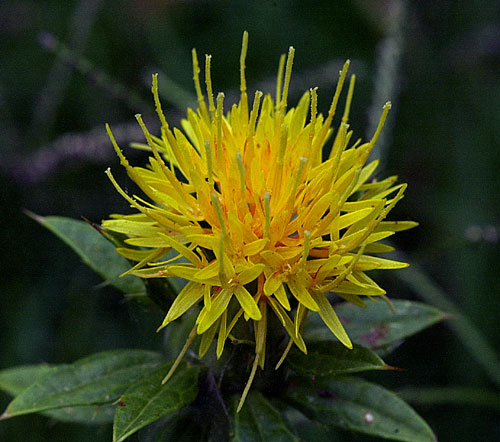
One of my saved searches on eBay is for saffron. Saffron is the most expensive foodstuff on earth—depending on where you buy it, a kilogram can cost between $350 and $110,000. I tend to buy at the lower end of the price scale, obviously. Today I saw once again an advertisement for 20g saffron for only $9, or $450 a kilogram. But it said “SAFFRON FLOWER (Safflower) PURE SPICE”, so off to find out what safflower is. It wasn't saffron, of course, but surprise, surprise: it's a plant that I pulled out as a weed 18 months ago. Here the picture from Wikipedia, then my own photo:

|
|||||||||||||||||||||||
|
Storm damage
|
Topic: general, gardening, photography | Link here |
Nasty weather this morning: dark and windy, about the worst possible for the exterior photos I do every weekend (normally Saturday), so I postponed them until tomorrow.
When chopping down the trees to the immediate north-east of the house (Lilac, Senna), we had left one of the Sennas, though we weren't sure that was the correct decision. The weather made its mind up for us, uprooting the remaining Senna and breaking off a couple of cannas that hadn't died yet:

|
|||||||||||||||||||||||

|
|||||||||||||||||||||||
It makes it clear that my decision to put in a wind break was a sound one. The posts are already there; now I need to buy some cross-members to attach the screen to.
|
Nemo: lesson cut short and new toys
|
Topic: animals, general | Link here |
Despite the weather, into Ballarat for the third puppy training lesson for Nemo. Didn't get very far: it started raining, lightly at first, but then comparatively heavily. Didn't get any photos of him either.
On the way home, turned off to look at the roadside plant shop in Napoleons. There was nothing there, but we saw a sign pointing to a garage sale, so on to investigate. A couple of kilometres further on we found another sign. It had seen better times, and was now pointing either straight ahead or to the left. This was round the place where the navigator gave us the strange directions last week:
|
|||||||||||||||||||||||
Which way was it? The sign said 119 Parkinsons Road, so I just needed to type it in to the navigator; and it found it. It took us there, but the wrong way: we had just passed the junction, and it kept us on the road we were on, taking us about 2 km longer through some of the worst roads I have been on in the recent past. If we had turned around and gone back 20 metres, it would all have been on good roads. Another limitation of the navigator.
There wasn't much at the garage sale, but Yvonne was in a buying mood and bought a keyboard for her horses and a couple of toys for Nemo.
|
New USB tuner: success
|
Topic: multimedia, technology | Link here |
Finally got round to putting the new Winfast DTV Dongle Gold (who thinks up these names?) into cvr2. It worked out of the box—that's a first—but for some reason I couldn't persuade MythTV to do a manual recording on it, possibly because of some incorrect timing calculations. Shortly afterwards it recorded a film on it normally, so there's nothing wrong with the tuner.
About the only issue I had wasn't directly related to the dongle: it only has an antenna in connection, not an antenna out. One of the two existing (PCI) tuners I have in the machine also has no antenna out, so there was no direct way of connecting all three. Over to Chris' place to collect the third one, but it proved that she didn't have it, and I spent a fair amount of time looking for tuners and also a display card with TV out to connect up to the analogue TV I lent to her a while back. This is the same configuration that I set up on 18 September 2004, and which I described in some detail. At the time I wondered whether it wasn't too much detail, but now I'm glad I did it.
|
Projector comparison
|
Topic: multimedia | Link here |
Also finally got around to comparing the brightness and the size of the displays of my 3 projectors, using an xterm with white background as a basis. The results were surprising:
| Screen | Screen | Screen | Screen | Top | Bottom | Lumens | Top | Bottom | ||||||||||||
| Projector | height | width | diagonal | area | left | left | Centre | centre | right | right | ||||||||||
| Acer | 108 cm | 202 cm | 229 cm | 2.18 m² | 58 lux | 70 lux | 106 lux | 231 | 124 lux | 145 lux | ||||||||||
| Panasonic | 133 cm | 231 cm | 267 cm | 3.07 m² | 148 lux | 151 lux | 185 lux | 568 | 113 lux | 134 lux | ||||||||||
| Sanyo | 137 cm | 241 cm | 277 cm | 3.30 m² | 147 lux | 174 lux | 241 lux | 792 | 144 lux | 176 lux | ||||||||||
I had expected the relationship between the brightness of the projectors, but not the light falloff to the corners, which was barely perceptible. And the overall brightness is nothing to worry about, I suspect. The projectors are supposed to have brightnesses of 1000 lumens, 1000 lumens, and 1200 lumens respectively, but that's before processing.
|
Dinner and games
|
Topic: general, animals | Link here |
Chris around for dinner, after which we let Nemo play with his new toys. One looks like a cross between a Rosella and some kind of dinosaur:

|
|||||||||||||||||||||||

|
|||||||||||||||||||||||
It makes a groaning noise which scared Nemo off at first, but now he loves it. The question is how long it'll last; but for $3 for two toys, I think we can survive.
| Sunday, 11 July 2010 | Dereel | Images for 11 July 2010 |
| Top of page | ||
| previous day | ||
| next day | ||
| last day |
|
New panorama levelling
|
Topic: photography | Link here |
The Bureau of Meteorology had forecast rain today, but it was a nice sunny day, and my biggest problem was taking my panoramas into the sun:

|
|||||||||||||||||||||||
This was also the first time I tried out the dual head panorama levelling system with the panorama head mounted on top of a ball head:
|
|||||||||||||||||||||||
The ball head allows me to position the panorama head in a horizontal plane. Previously I had been doing that by adjusting the legs of the tripod, which was a real pain, since the legs aren't perpendicular to each other. The “correct” way to do this seems to be to buy a leveling plate such as the Manfrotto 338 3416, which sells for US $95:
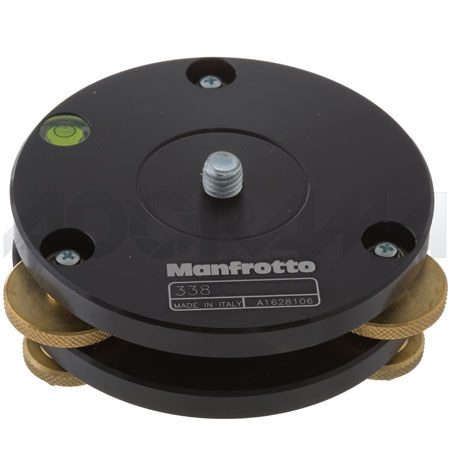
I'm not even convinced that the levelling plate does it better. It's limited to 5° adjustment in each direction, and it has the same disadvantage as levelling the tripod legs, in that the adjustments aren't orthogonal. It does have the distinct advantage of stability; there's quite a moment on the ball head, and I have to tighten it strongly to stop it tipping. And while adjusting it I have to take up the moment myself. But the ball head was just lying around, and even if I had bought one, it would be considerably cheaper than the Manfrotto plate. As it was, my total investment to date has been 32¢.
|
Catching up with the weeds
|
Topic: gardening | Link here |
The good weather also gave us some time in the garden, which sorely needs it. Spent an hour or so removing weeds, but didn't get as far as planting anything new.
|
Why HDTV died
|
Topic: multimedia, opinion | Link here |
Looking at ABC's cancellation of the HDTV programme, there's more than meets the eye. Today I recorded the only film in “HDTV” (in this case 1080i) on any channel during the whole week. It wasn't HDTV:

|
||||||||||||||||||||||

|
|
||||||||

|
|
||||||||
About the only thing that's high definition is the WIN logo. The film has clearly been scaled up. Looking through the programme, it seems that the only things that are in HD any more are news programs, so ABC's decision may not be as stupid as it seems. But why are they dropping HDTV content? Does it cost them more?
| Monday, 12 July 2010 | Dereel | Images for 12 July 2010 |
| Top of page | ||
| previous day | ||
| next day | ||
| last day |
|
SkyMesh connection problems
|
Topic: technology | Link here |
My discussion with SkyMesh is going nowhere. My support requests go unanswered for up to 2 weeks. They claim that my modem is defective because they can't reach it from time to time and ignore the fact that these issues have occurred with three different modems. At the same time, they want me to pay up front for a very expensive replacement. When I asked why, I got the response (original formatting):
This is tantamount to accusing me of intending to steal the modem. The facts of the matter look very different to me. Since moving to SkyMesh I have had 125 outages, measured as when both the other end of the link and all 5 systems that I ping are unreachable. I add this latter check because it seems that sometimes the other end of the link doesn't respond. But I've been seeing a lot of this kind of thing:
The interesting columns here are the second (ability to ping the other end of the link) and five systems spread around the world. In this example, the link appears to be down, but I'm able to ping random subsets of the five systems. This looks very much like problems in SkyMesh's network to me. Wrote back and asked them to fix that first, and then we could see what was wrong with the modem. I'm losing hope of an amicable settlement.
|
w_scan revisited
|
Topic: multimedia, technology | Link here |
w_scan is a utility to perform a frequency scan on DVB-T tuners. I've tried it a couple of times in the past, but it didn't work: it scanned only the frequencies stored in a pre-defined table, and they weren't the Australian ones.
That seems to have changed: it now takes a parameter to specify the country, so I tried it out again. The result: it works some of the time. It doesn't find anything at all with the new Winfast DTV Dongle Gold, and with one of the other tuners it didn't find SBS:
The problem here is that SBS broadcasts on 634.625 MHz and not 634.500. w_scan sees the real frequency, but drops it. The filter timeout seems to be part of the issue.
|
Weeding with no end in sight
|
Topic: gardening | Link here |
A little more work in the garden. In the morning the weather was mild and there was almost no wind—ideal weather for spraying weeds—but Yvonne was away training horses. By the time she got back, the wind had increased too much for us to be able to do any spraying, so I spent an inordinate amount of time pulling out (other) weeds by hand. We really must keep this under control.
| Tuesday, 13 July 2010 | Dereel | Images for 13 July 2010 |
| Top of page | ||
| previous day | ||
| next day | ||
| last day |
|
Still looking for real HDTV
|
Topic: multimedia | Link here |
As planned yesterday, I tried some other simulcast recordings which I thought might be HDTV. This was on “WIN” (another Microsoft related company, it seems). Here are the results from two different shows, first the standard 567i programme, then the 1080i one:

|
||||||||||||||||||||||

|
||||||||||||||||||||||

|
||||||||||||||||||||||

|
||||||||||||||||||||||

|
||||||||||||||||||||||

|
||||||||||||||||||||||
If any of this is HDTV, they're hiding it well. I'll have to guess that this isn't the case here. But one thing it does show is that the higher “resolution” makes the jaggies from the interlacing less painful.
It seems that news programmes are the ones most likely to have HD content. Recorded 7 HD News (a Yahoo! company) on the SD and HD channels; the programme guide had flagged the latter as “HD”. Result? Both in SD:
=== grog@cvr2 (/dev/pts/2) /recordings 33 -> mpid
Finally I watched a programme that I had recorded from ABC 1. The results are terrible: the combination of deinterlacing and upscaling makes the text almost illegible. Here are two consecutive frames, followed by a detail of the first one:

|
||||||||||||||||||||||

|
||||||||||||||||||||||

|
|
||||||||
This quality can't be explained by the low resolution alone; the example above from “WIN” is much better. I'm left with the impression that ABC is really trying to make a political point. How can anybody get away with such poor quality? To think that I bought a 1080p projector for this junk!
| Wednesday, 14 July 2010 | Dereel | Images for 14 July 2010 |
| Top of page | ||
| previous day | ||
| next day | ||
| last day |
|
Video images of Nemo: capitulation
|
Topic: multimedia, animals | Link here |
I've been half-heartedly looking for a universal and simple method of transcoding video images for some time now. There are plenty out there, as long as you make some concessions. Then I need to put them on my photo pages. But somehow I just haven't got round to doing it, and Yvonne has been asking me to do so for some time. Well, she's been asking me to put them on Youtube, something that goes very much against the grain.
Today I couldn't procrastinate any more, and uploaded two clips that she had taken of Nemo playing with his sighing bird toy on Saturday. It started off promisingly: I went to http://upload.youtube.com/my_videos_upload and found:

|
|
||||||||
That looked like some Javascript problem, like firefox frequently develops. Normally I can get it back to life by killing firefox and restarting it, but that didn't work here. Still, I was able to select the link, and was presented with one of these horrible file selection windows, navigating directories one level at a time, and then for no apparent reason (literally) I got an error message:

|
|
||||||||
No option to retry; I had to go back to the horrible file selection window and try again. And it failed again; possibly it's the Javascript issue.
Then I noticed the line at the bottom:
Upload problems? Try the basic uploader (works on older computers and web browsers).
Selected that, and was able to upload. It even has the advantage that you don't have this horrible file selection window. Next time I'll go there directly, even if I fix this Javascript issue.
|
More wind damage
|
Topic: gardening | Link here |
The most obvious damage from the winds over the weekend was the uprooted Senna, but I've been discovering more. The verandah panorama taken on 11 July 2010 shows it. The hibiscus and one of the grasses were nearly pulled out of their pots, and they needed stakes to hold them up:

|
|||||||||||||||||||||||

|
|
|||||||||

|
|
|||||||||
High time to put the wind breaks in place. But beyond (finally) harvesting the remaining potatoes, I didn't get much done. I need to stop messing around and get all this work done. What's stopping me?
|
Bread: ratio of water to flour
|
Topic: food and drink | Link here |
Baked not one, but two loaves of bread today: my standard rye bread and a white bread with plain white bread flour. Last time I baked, I had a small accident: instead of putting in a total of 860 ml of water, I put in 920. On that occasion I decided to leave it that way and see what would happen. The results were surprising: the bread rose more—something that I've been trying to achieve—and seemed generally better. So today I tried even more: instead of 1300 g flour, I used 1250, along with the same amount of water.
It would be nice to say that it was even better, but it wasn't: I forgot to change the temperature in the oven after putting the bread in, and the surface was slightly scorched. But I think that the result might otherwise be even better. More experiments needed, but I'm surprised how uncritical the proportions are.
| Thursday, 15 July 2010 | Dereel | Images for 15 July 2010 |
| Top of page | ||
| previous day | ||
| next day | ||
| last day |
|
Nemo: frustration
|
Topic: animals | Link here |
Nemo is growing up rapidly, getting stronger and more adventurous. He's also quite a handful, and he's gradually getting on my nerves—even on Yvonne's. How do we get him to slow down, to stop mouthing (play-biting), to leave the cats alone? Ian has given us suggestions, but if they're working, they're taking their time. It's also interesting how, after millennia of domestication, people still have such radically different opinions about how to train dogs. Yvonne is currently reading a book by the monks of New Skete, and they suggest “massage”, apparently just stroking the dog. The intention appears to be to draw his attention away from the undesirable activity. We'll try that for a while; hopefully it will work.
|
The return of the kangaroos
|
Topic: animals | Link here |
The kangaroos have been back in force lately. I've seen up to 20 on occasion, and Yvonne claims to have seen up to 40. I had to chase them away twice today, and though I haven't seen any in the garden for many months, they've clearly been there:

|
|||||||||||||||||||||||

|
|||||||||||||||||||||||
|
Spring flowers on their way
|
Topic: gardening | Link here |
We have planted a lot of what I think are Chasmanthe floribunda. At one point I had thought that they were very similar to the Watsonias, but they bloom in late summer, and these bloom in early spring.

|
|||||||||||||||||||||||

|
|||||||||||||||||||||||
I'll keep an eye on them as they bloom; it looks like we'll have plenty around the garden.
|
ALDI Medion ΛΚΟΥΛ netbook
|
Topic: technology | Link here |
This week ALDI had a netbook on special, only $389, with a real keyboard, 250 GB disk and 1 GB memory, and the incongruous name Medion Λκουλ (which friends claim is really something written with fonts that imitate Greek). ALDI hardware has the wonderful advantage that if you don't like it, you can return it for a refund within 2 months, clearly a great advantage considering the hardware compatibility issues that free operating systems have with small laptops.
Yvonne brought back one, and I spent the afternoon playing around with it. It doesn't have a DVD drive, though it comes with a number of what I think are DVDs, one of which has the interesting statement (in German) “You are not authorized to make unauthorized copies of this data medium”.
So I need a USB DVD drive. Fortunately I bought a new drive last week, and I have an old USB adaptor housing. Put the drive in and tried things out; worked. But it wasn't the disk I wanted, so I still had to burn one. Put that in swamp, my test machine, and had lots of difficulty, finally coming to the conclusion that Yet Another Motherboard has a defective USB. I couldn't mount my external USB disk drive there (it stopped the machine from even finishing POST), and the USB keyboard had trouble when anything else was connected. Damn. That's the last of that series of motherboards, so now I have plenty of perfectly good left-over memory and processors. I wonder if I can find old motherboards on eBay at a reasonable price.
The next attempt was with a USB stick, which I burnt in teevee. It wouldn't boot; it looks as if the image was faulty. But I did locate a DVD with FreeBSD 8.0-RELEASE, and booted from that. The first thing I wanted to do was to back up the disk, which had to go over the network, so went into the Fixit mode. The kernel found the (wired) Ethernet interface, but not the wireless one. And after a lot of investigation, it proved that I couldn't receive any data via the interface. netstat showed that the data was arriving, but it didn't seem to make it out of the driver.
In the end put the disk from swamp (9-CURRENT from some time in March) into the USB housing and booted the netbook from that. That worked, and so did the wired interface; still no wireless interface, but I'll look at that problem later. Copied the disk image to dereel, compressing it from 232 (“250”) GB to 17 GB in the process, and showing that these Atom CPUs really aren't very fast. Tomorrow I'll install the image on the internal disk and investigate getting the wireless interface going.
| Friday, 16 July 2010 | Dereel | Images for 16 July 2010 |
| Top of page | ||
| previous day | ||
| next day | ||
| last day |
|
Building world on Λκουλ
|
Topic: technology | Link here |
As planned, copied the external disk to the internal disk on the Λκουλ netbook. In the process, discovered a complete object tree for the last OS build, clearly nothing I needed to copy across, so during the copying (with bsdtar), removed the remaining parts of the /usr/obj tree. Surprise: unlike gnutar, bsdtar can't handle that. It died on me without completing the remainder of the copy. That looks like a serious bug to me: sure, people don't normally remove files while they're being copied, but it can happen. Another reason to stick to gnutar (the other is that I'm more used to the baroque command line options).
After that, as planned, brought the system (FreeBSD CURRENT of about March of this year) up to date. That took forever:
That's over 4½ hours elapsed time, nearly 7 hours user time and 83 minutes system time: over 8 hours CPU time in total. It would be nice to blame that on the WITNESS option that is set by default in -CURRENT, but that should only affect the system time. The times for the kernel build were corresponding, and even the installworld target (mainly copying) seems to have taken longer than usual, possibly because of the low-power disk:
This is all without a valid comparison, of course, but next time I build on a “normal” computer, I'll be able to do that comparison. More to the point, I still don't have a wireless interface, and I can't start X:
That's not surprising, considering the age of the X server, but I think I'll try Linux first before I upgrade. If I can't get the wireless interface working, it won't help anyway.
|
Reinstating the mystery plants
|
Topic: gardening, technology | Link here |
What is that flower that I photographed yesterday? It was one of my mystery plants, but then I found out what it was and moved it from that page. Spent a while searching for it (as I mentioned in yesterday's entry, it's chasmanthe floribunda), but it occurred to me that I hadn't done anything sensible by removing the entries from the mystery plants page, so spent some time reinstating them. One of the issues was that I had changed the names of the pages (for example, Gardening/mystery-12.php became Gardening/chasmanthe-floribunda.php), and it's possible that some references remain to the “mystery” name. Sure, I can put in redirects, but how about a single file that contains the lot? In the end I wrote a page that looks like this:
The function redirectme looks for the name of the page in the first column and redirects to the page in the second column. All I needed to do was create a link to this page with the name in the first column. No extra files (though I did use a symlink so that I can update the page easily).
|
Nemo: continuing frustration
|
Topic: animals | Link here |
Nemo is getting calmer, but not much. From Ian's point of view he's doing well: he learns well and enjoys the exercises we give him. But he's a pain to have in the house, and any progress we have made with stopping his mouthing is very slow. Even Yvonne is wondering whether we shouldn't get rid of him. But there must be a way to solve the problem.
|
The world travellers arrive
|
Topic: general, food and drink | Link here |
Yana and Sundance have made it here on their journey from Ontario to South Australia:

|
|||||||||||||||||||||||

|
|||||||||||||||||||||||

|
|||||||||||||||||||||||
At Yana's request, a steamboat, the first we've had in a long time:

|
|||||||||||||||||||||||
|
IPStar modems: disconnect where possible
|
Topic: technology, opinion | Link here |
Sundance promptly fired up his computer and tried to get a DHCP lease. Problem: we don't use DHCP. But the satellite modem has a server, so enabled it. Result: reboot and a minute off the network—a programmed dropout:
That took 48 seconds, with an uncertainty of about 30 seconds—noticeably less than the other dropouts. Does this mean that the others have some other reason?
| Saturday, 17 July 2010 | Dereel | Images for 17 July 2010 |
| Top of page | ||
| previous day | ||
| next day | ||
| last day |
|
Nemo training: no thanks
|
Topic: animals, photography | Link here |
Today was puppy training for Nemo in Ballarat, but I'm so discouraged that I didn't go. Yana and Sundance did, and Yana took some photos with her new Canon Ixus 130. Somehow it doesn't seem have any better autofocus than other compact cameras, and as usual there's no manual focus. The result is that the camera decided to focus on something that it could identify easily, which was almost never Nemo:

|
|||||||||||||||||||||||
They did some more training—all good stuff, but it doesn't address the problems we have:

|
|||||||||||||||||||||||
Ian had some suggestions about how to calm Nemo down, of course, but somehow it didn't sound convincing. Jenny Judson also found out about the problem and called up Yvonne and spoke to her for an hour, coming up with some new idea (“The Monks of Old Skete are no longer modern, and there are also problems with the Weston method [which Ian uses]”). As I commented a couple of days ago: it's strange that people are still not agreed about dog training after all the millennia that dogs and humans have been associated. Anyway, Jenny sent some documents with other suggestions, which we'll examine in the coming days. For whatever reason, Nemo behaved himself today.
|
Ubuntu on Λκουλ
|
Topic: technology | Link here |
As planned, installed Ubuntu 10.4 on Λκουλ. Why do Linux installations take so long? Anyway, it came up and recognized the display hardware immediately, and the Ethernet interface was also recognized. But still no joy with the wireless LAN card. Did some googling and discovered that yes, people had had it working, but I didn't have enough time to follow through.
About the only thing that did become apparent: this machine has a 1024×600 display, which I knew before I bought it, of course. And they seem to be becoming more prevalent. All the more reason to reject window managers and programs that take up the top and bottom of the display. After removing all the bars and status displays and things, the area remaining for a “full-screen” firefox window is only 1012×376, barely more than half the height of the screen, and barely more than the display height of the EGA that IBM introduced nearly 30 years ago:

|
||||||||||||||||||||||

|
||||||||||||||||||||||
So modern display software wastes 38% of the usable area on this tiny display. That's yet another reason to reject GNOME and other Microsoft-like display environments and use a window manager that doesn't want to be an entire computer.
|
Chapatis revisted
|
Topic: food and drink | Link here |
Indian food again today. While in Waterloo, Sundance participated in a course in chapati making, so we got him to do the chapatis. Quite interesting: his dough was much moister, and he cooked them at a much lower temperature:

|
|||||||||||||||||||||||

|
|||||||||||||||||||||||

|
|||||||||||||||||||||||
The results were good, but the lower cooking temperature meant that it took nearly half an hour to make them all. I must investigate. It's also interesting to note the method of pressing down on the chapatis with a cloth; I had thought that a spatula would do the job, but it seems that the cook in Waterloo had insisted on the cloth.
Dinner also brought home to us the difference between our appetites and the appetites of people who have been travelling by bike for 10 months. I had already expected that, but Yana and Sundance must each have eaten 5 times as much as Yvonne. Sundance was also talking about the preference of Australian research institutes to perform practical experiments rather than theoretical research, so considered dividing a quark, with mixed results:

|
|||||||||||||||||||||||

|
|||||||||||||||||||||||
| Sunday, 18 July 2010 | Dereel | Images for 18 July 2010 |
| Top of page | ||
| previous day | ||
| next day | ||
| last day |
|
Nemo quietening down
|
Topic: animals | Link here |
The last few days with Nemo haven't been much fun, but there are signs the worst is over. We've taken heed of what a lot of people have said, have been more gentle in the punishment (and yes, we believe in punishment), haven't tried to be Alpha dogs (against Weston's recommendation), and other odds and ends. And hey, it seems to be working! He's much more gentle and controlled. But what is the real reason? It would still be nice to know.
|
More fun with Λκουλ
|
Topic: technology | Link here |
So I have Ubuntu 10.4 running on Λκουλ, but without the all-important WLAN interface. Upgraded the kernel to the latest version, without any obvious improvement, and then spent more time looking around the web and found some instructions on how to compile the driver. Did that—another 200 odd MB of data—and once again there was no improvement.
OK, the reason I tried Ubuntu is that it might have been easy. I always find so many things that grate on Linux, and for some reason that I didn't care to follow, the NFS file systems would no longer load—instead I got the startling message Disconnected from Plymouth, which doesn't seem to have any further meaning. But the text-mode terminals were missing. I'm not sure why, but using this tiny interface with the funny mouse to do anything is so painful that I couldn't be bothered. Back to investigate FreeBSD.
But how? Ubuntu had not been able to install its bootstrap in the root partition, so it had overwritten my FreeBSD boot selector. OK, I've used GRUB before, so went off looking for the config file. Surprise, surprise! The authors had recognized that GRUB was a pain to use, so they rewrote it and replaced it by something that is an order of magnitude more painful to use. All I wanted was to add an entry for the FreeBSD partition on the disk, which should have been a couple of lines. To ensure a smooth transition, they've changed the names of the configuration file, but finally found the official manual for GRUB 2, conveniently numbered 1.98-r2508, and discovered that the configuration file is now called /boot/grub/grub.cfg, which starts of like this (somewhat trimmed):
So it's no longer a configuration file: it's a script. At the very least they could have separated configuration information and code. Took a look in /etc/grub.d, which, if anything, was worse. It's all just scripts.
Finally found instructions, to do exactly what I wanted: add FreeBSD to a Debian boot. What I ended up with was a file /etc/grub.d/40_custom with the following content:
The meaning of chainloader is not really clear from the manual, which doesn't give any BSD examples, though it does state that chainloader is not necessary for them. I also didn't remove the comment, though I should have done, since it's completely wrong. This isn't easy. The idea of modular configuration files is arguably useful, but mixing code and data in a “configuration file” is most certainly not. To quote one of the comments in the previous instructions, written by “doik”:
i install grub 2. it is foul beyond words to configure and is not pretty at all. it also seems much slower at getting to the menu. grub 2 is FAIL.
So, finally I had a GRUB configuration that should boot FreeBSD. Rebooted. No menu popped up, and I ended up back in Linux. Read the manual again. Played around with variables that might potentially change the behaviour. No change. Finally, Juha Kupiainen told me that I had to hold down the left shift key when booting. That worked: I got a menu and was able to select FreeBSD. But there's nothing anywhere in the manual that mentions this. Somebody told me that this is a (presumably undocumented) Ubuntu extension. What a pain!
Still no wireless card, of course. pciconf -lv tells me:
I wonder what the question in brackets is intended to mean. More googling, and found instructions for installing this code, first requiring downloading the drivers from the Realtek web site, which led me around a couple of cycles in a link loop before starting to download two copies. Left that until tomorrow.
|
Sundance and the Nonstandard model
|
Topic: general | Link here |
After dinner, had another discussion with Sundance about the current understanding of the Standard Model, illustrated with lots of leftovers:

|
|||||||||||||||||||||||

|
|||||||||||||||||||||||

|
|||||||||||||||||||||||
To my great disappointment, I found that the universe is not all Quark: there are leptons (on the left) and bosons (not shown here). I think we should change the name of leptons to Hartkäse. And of course, compared to the Wikipedia page, the arrangement is different:

The whole thing is on its side, the bosons are missing, and the colours are roughly reversed—giving us the right to claim that this is the non-standard model, though Sundance has also voiced the opinion that Wikipedia has it wrong. I recalled the Standard 8 model of the late 1940s, and thought that it was somehow related to Ford Prefect, but that proved to be another manufacturer. We're currently considering whether it would have more success if it were called the Triumph Model.
| Monday, 19 July 2010 | Dereel | Images for 19 July 2010 |
| Top of page | ||
| previous day | ||
| next day | ||
| last day |
|
The wanderers depart
|
Topic: general | Link here |
We had intended to eat huevos rancheros for breakfast this morning, but real life got in the way, and Yvonne had to go into town. In the meantime, Sundance and Yana prepared for the last leg of their journey to Adelaide. They were planning to make it to Lake Bolac tonight, and they left shortly after midday:

|
|||||||||||||||||||||||

|
|||||||||||||||||||||||

|
|||||||||||||||||||||||
Ah, what peace! It was fun having them, but basically we're happiest by ourselves. Definitely not the unlimited social types. Spent the rest of the day relaxing.
| Tuesday, 20 July 2010 | Dereel | Images for 20 July 2010 |
| Top of page | ||
| previous day | ||
| next day | ||
| last day |
|
GRUB 2 revisited
|
Topic: technology | Link here |
I haven't been playing with λκουλ much lately—I'll take a stab at the NDIS-based wireless network later—but I wanted to boot it in FreeBSD today to try out something potentially dangerous. And, of course, the Left shift trick didn't work: I had no way of booting into anything but Linux.
This is with GRUB 2, and there's supposed to be a way of getting it to present the boot menu automatically, like there was with GRUB 1. But everything has changed. The files are spread across three directories: global information is in /etc/default/grub, “configuration” information (consisting largely of scripts) in /etc/grub/, and the boot environment is in /boot/grub/, all 186 files and 4.3 MB of it. I've understood some of the puzzle, but not how to get the menu. It looked as if it should be an entry in /etc/default/grub, but I couldn't see one. There are comments for some of the values, like the all-important resolution of the graphical display—for a boot loader!—but not for the menu. This is clearly a case of FTFM: it's almost impossible to find out how to configure the thing.
With the help of a number of people on IRC, finally got it to work. Ubuntu has its own document, apparently written as an afterthought, and at the section with the emetic URL https://help.ubuntu.com/community/Grub2#/etc/default/grub (file)—with spaces in it!—I found the answer: undefine GRUB_HIDDEN_TIMEOUT. It seems that this should have happened automatically: one of the myriad scripts, /etc/grub.d/30_os-prober, should have detected FreeBSD, but it didn't. So, finally, after a couple of hours, I can dual boot the machine the way the FreeBSD boot0 boot manager would do without any configuration. Isn't progress marvellous?
|
More network issues
|
Topic: technology | Link here |
Access to http://www.lemis.com/ failed today. It's hosted at TransACT, and further investigation showed that I couldn't access that network from 09:54:17 until 10:33:16, nearly 40 minutes. Traceroutes from this end ended at Equinix:
=== grog@dereel (/dev/ttypa) ~/public_html 225 -> traceroute ozlabs.org
I was able to access TransACT from my US server, so it wasn't TransACT itself. A traceroute in the other direction looked like:
=== grog@bilbo (/dev/pts/2) ~ 2 -> date; traceroute sat-gw-ext.lemis.com
Probably not SkyMesh's fault, but they're the only people I could report it to. I'm too angry with them at the moment to call them up and risk losing my temper, so sent a mail message at 10:23:51. No response, no acknowledgement of receipt. I wonder to what extent the resolution of the problem was related. Certainly that would mean that they reacted pretty quickly (and that thus the problem was at SkyMesh after all).
|
Back to weeding
|
Topic: gardening | Link here |
The weather wasn't spectacular today, but I did manage to get some weeding done. It's amazing how much grass has popped up in the area where we first started removing the lawn and covering it over with cardboard and mulch over two years ago:

|
|||||||||||||||||||||||

|
|||||||||||||||||||||||
Spent about half an hour, until it started raining, and only got a couple of square metres weeded. Once this is finished, I should really keep on top of it.
|
Powercor: killing uptime
|
Topic: general, technology | Link here |
dereel has been up for 110 days now. Or it was. While watching TV in the evening, we had a power failure, this time over 3½ hours. Yes, we now have UPS running just about everything, but they don't last that long. At least we didn't damage the new projector.
| Wednesday, 21 July 2010 | Dereel | Images for 21 July 2010 |
| Top of page | ||
| previous day | ||
| next day | ||
| last day |
|
No hot water
|
Topic: general | Link here |
The power came back shortly after midnight, turning the heating on to daytime levels and turning on many lights. But by morning, the hot water (storage system, heated only at night) still hadn't come up to temperature. I wonder why: that should have been plenty of time. Turned the switch on to the expensive daytime position, and it warmed up, so at least the heater isn't damaged. We'll see tomorrow if something else has gone wrong.
|
Nemo: slow and unsteady progress
|
Topic: animals | Link here |
Sometimes I think we're making progress with Nemo, and at other times I despair. Today he ran all over the garden, wouldn't come back, and finally saw some kangaroos and ran after them. It's a good thing he can't get through the fence up against the lagoon.
|
Weeding and kangaroo damage
|
Topic: gardening | Link here |
These weeds in the bottom corner of the garden are particularly obnoxious. Spent the best part of an hour mainly clearing another square metre or so.
And the kangaroos are attacking the plants again! It's been months, but not enough. Back with the protection. Maybe we should put a high fence around the whole garden to keep out not just the kangaroos, but also Nemo.
Also spent some time measuring things up in preparation for a timber purchase, maybe tomorrow.
|
Λκουλ: installing NDIS
|
Topic: technology | Link here |
Continued trying to get the wireless network card running on λκουλ today. I had downloaded the driver from the Realtek site, and the instructions were straightforward enough. But where were the drivers? The instructions mention the files net8192se.inf and rtl8192se.sys, but what I got was a whole directory tree. Went finding and found four files, RTL8191_8192_SE_WindowsDriver_2016.2.0521.2010.F0062_23.P0525_ISS_1.00.0157.Win7.L/91_92_SE_Driver/Win7X64/net8192se.inf, RTL8191_8192_SE_WindowsDriver_2016.2.0521.2010.F0062_23.P0525_ISS_1.00.0157.Win7.L/91_92_SE_Driver/Win7X86/net8192se.inf, RTL8191_8192_SE_WindowsDriver_2016.2.0521.2010.F0062_23.P0525_ISS_1.00.0157.Win7.L/91_92_SE_Driver/Win7X64/rtl8192se.sys and RTL8191_8192_SE_WindowsDriver_2016.2.0521.2010.F0062_23.P0525_ISS_1.00.0157.Win7.L/91_92_SE_Driver/Win7X86/rtl8192se.sys. Presumably the Win7X64 files were the ones for 64 bit mode and the Win7X86 are for 32 bit mode (and not 86 bit mode, as the convention would seem to imply). But what about Win7? That looks like Microsoft “Windows 7”, which is not what I need (though it's what came with the machine). Tried running ndisgen against them, and it happily generated a KLD that I could load. With verbose boot messages, it also produced quite a bit of information:
But that was all. It should have generated probe messages for an interface ndis0, but nothing happened. So what's wrong now? Wrong drivers? Or something else? It would have made more sense to take the drivers that came with the machine, but they're happily packed up in a disk image. It seems that I could use mdconfig on it if it weren't compressed, or geom_uzip for it if it had been compressed with mkuzip. The image is 250 GB in size, so it would be nice to be able to pipe the output of bzcat into mkuzip, but mkuzip wants a disk file or a character device. It was easy enough to hack it to read from stdin, but it wants to issue a call to stat to find the size of the file. A little more work and another flag should solve that problem. Manãna, at the earliest.
|
Australian Broadband Guarantee: help from the DBCDE
|
Topic: technology | Link here |
There doesn't seem to be an obvious solution to problems I'm having with SkyMesh, so today I called up the Department of “Broadband”, Communications and the Digital Economy to ask for help. The number they gave was 1800 254 649, but though that's the Department, it's the wrong number. The correct number is 1800 883 488. Called that and got a recorded message telling me that they were too busy to take my call, that I should leave my phone number and they would call me back. I did, they didn't.
| Thursday, 22 July 2010 | Dereel | Images for 22 July 2010 |
| Top of page | ||
| previous day | ||
| next day | ||
| last day |
|
Getting the timber
|
Topic: gardening | Link here |
A lot of things in the garden are waiting on supplies: the pond, the wind breaks and the vegetable garden. Finally got my act together and into town to pick up timber and pond liner. The timber was straightforward enough, though the total cost, exactly $500.00, looked fishy. Getting the pond foil was another matter. The cheapest was at Bunnings, not my favourite place. They sell it by the (4 m wide) metre for $34.88 per metre. I needed 5.5 m, so that would have set me back $191.84. Found some pre-packed foil that was much cheaper: 4.5 m, also 4 m wide, for $115.00; from the roll it would have been $156.96. Clearly worth investigating. It's too short, of course, but one end of the pond is only half the width, so I could cut some off one side and glue it on the end. But how?
Found a bloke there with a “we are the experts” emblem on his name badge, who professed not to have any idea. They did find a number of people who discussed the matter and thought of various possibilities, but found nothing that was clearly intended for this purpose. In the end left with a tube of swimming pool adhesive, which doesn't fill me with confidence.
|
Why I won't vote for an L party
|
Topic: opinion | Link here |
Now that the federal election has been called, we're inundated with mail, including instructions for how to vote by post (but not when the election is), and the principal candidates outlining reasons why I should vote for them.
At least that's the theory. Received a document from Sarah Henderson, the “Liberal” candidate for Corangamite, outlining reasons to vote for her: the incumbent party and representative are horrible, horrible and incompetent people. She gives a list of the blunders they have made, including “walking away” from planned measures against climate change—the result of successful opposition by her party to anything threatening the status quo. And she has grown up in Geelong. And that's all there is in the letter.
There is an accompanying brochure describing what she plans to do: oppose Labor and the Greens, install CCTV cameras in public areas, widen the Princes Highway, but nothing much about climate change. Clearly her highest priority is to bash her political opponents. From the content on her web site a couple of days ago (original markup):
Today, 20th July, I am on the campaign trail in Belmont and Ocean Grove. This morning, I was set to debate Darren Cheeseman on ABC Radio Ballarat but at the last minute he pulled out. As I told WIN-TV, Mr Cheeseman is continuing to hide behind his deceptive media releases and electoral advertisements. And despite Labor’s deceptive and dishonest claims, Workchoices is dead and buried. But as Kevin Rudd himself experienced, Labor will stop at nothing.
There is other stuff there too, but this is first paragraph and the only one highlighted in <strong>. Clearly it's intended to be the most important part.
That's not the first time that I've seen such stupidity from the Liberals. Last year I received mail from Senator Michael Rolandson promising not to even the budget for 30 years. They seem to have changed their tune on this now, and claim to be able to carry it off in 3 years, now that they want to be reelected. How much credence should you give to somebody who changes his tune that much when they want to have some gain from it?
A clear reason to vote for Labor, one might think. But they're almost as bad. About the only important difference on Darren Cheeseman's site is that it is considerably out of date. The last entry is dated 11 June. But the tone is the same, and the spelling and markup here are original:
Phoney Tonys party walks away from the Princes Highway
Wednesday, 26 May 2010 09:20
The Federal Opposition has abandoned its promise to duplicate the Princes Highway between Winchelsea and Colac, exposing the spin and dishonesty of Phoney Tony's candidate for Corangamite Sarah Henderson.
Interestingly, this information is completely out of date: the Liberals appear to have secured the promise, perhaps because of these polemics. About the only difference I can see is that Henderson seems to consider the Internet a useful means for disseminating information, while Cheeseman appears to have no idea. The markup of his web site looks horrible, though it is almost standards conformant, better than Henderson's. Of further interest is that both web sites are running Apache under Linux.
I have the distinct impression that the major parties have forgotten the purpose of an election and consider the voting populace stupid. Maybe they are on average, but it's still insulting treatment.
The Australian electoral system requires a numerical order of preference for every candidate, so I can't just omit Labor and the Liberals. Instead, I will put them in the last two places; I'll decide later on the order. One of the two candidates will still win, of course, but it's not clear that it will be the one with the most primary votes (votes where they are numbered 1 in the list). In the last election, Stewart McArthur (Liberal) got 44.70% of the primary vote, and Darren Cheeseman (Labor) got 41.91% of the primary vote, but after preferences it was Cheeseman who ultimately won, by a comfortable 1.7%. If more people vote for the alternative parties, it might shake the big two into rethinking the way they treat their constituents.
|
Horned tiger
|
Topic: general | Link here |
Watching Désaccord parfait (called “Twice upon a time” in English) on TV in the evening. It's much better than the English ratings suggest. Came across this image:

|
|
|||||||||
I asked Yvonne “What do you call a horned tiger?”. Her immediate response: “cocu”.
| Friday, 23 July 2010 | Dereel | Images for 23 July 2010 |
| Top of page | ||
| previous day | ||
| next day | ||
| last day |
|
Flowering succulents
|
Topic: gardening | Link here |
On one of our plant-buying sprees in Napoleons we bought a small succulent in ceramic pot, clearly intended for indoors. It looked a little scruffy round the edges, but the price was right and it showed promise. We put it on the mantelpiece in the dining room, and to my surprise, it's flowering—in the middle of winter:

|
|||||||||||||||||||||||

|
|||||||||||||||||||||||
That's not the only one. Our Crassula falcata—also somewhat scruffy, despite the high price we paid for it—finished blooming months ago (first photo), but it is also coming up with what must be the start of new growth, though the pink colour is somewhat unusual:

|
|||||||||||||||||||||||

|
|||||||||||||||||||||||

|
|||||||||||||||||||||||
|
More thoughts on the election
|
Topic: opinion | Link here |
To be fair to Darren Cheeseman, I received a personalized letter from him today (“Dear Gregory”; I wonder if he would appreciate me calling him Darren), outlining what he wants to do for his constituency if he is re-elected, in particular the matter of health care reform. It would be nice to be able to say that he didn't slate the Opposition, but there was a whole page in the accompanying brochure with headlines like “Mr Abbott's record of failure as Health Minister” and “Mr Abbott can't be trusted on health”. But in comparison to Sarah Henderson it was pretty low key.
But what do I want from the Government? Technological infrastructure, mainly, and that doesn't seem to be an issue for any candidate. Where's the world-class Internet connection? The moderately reliable electricity grid? The high definition television? None of these seem to interest anybody very much, not even this stupid Internet censorship scheme. Modern technology is still far from being mainstream.
|
Λκουλ: progress towards WLAN
|
Topic: technology | Link here |
More playing around with the WLAN issues on λκουλ today. Spent some time discussing where the firmware was; it's not in the distribution I got from Realtek, and the instructions that I had didn't mention any, but the documentation does mentions firmware. Callum Gibson found some somewhere, but it wasn't clear if it matched or not. He also found a Microsoft “Windows XP” driver for the chip set, and Sue Blake sent me the drivers she had on her identical Λκουλ netbook. Tried Callum's first, without success—until I realised that kldload rtl8192se_sys does not respect the current working directory; instead it uses the value of the sysctl kern.module_path unless a directory component is specified.
Finally got the correct module loaded, and—success!
And I had an interface:
=== root@swamp (/dev/pts/0) /src/FreeBSD/NDIS/Realtek-8191/realtek-XP/guts 110 -> ifconfig ndis0
No carrier? Tried bringing it up, but it seems that that's not the way you do it any more. Instead you need to create the real interface:
=== root@swamp (/dev/pts/0) /src/FreeBSD/NDIS/Realtek-8191/realtek-XP/guts 113 -> ifconfig wlan0 create wlandev ndis0
=== root@swamp (/dev/pts/0) /src/FreeBSD/NDIS/Realtek-8191/realtek-XP/guts 114 -> ifconfig wlan0
What does that message mean? Went looking, and it seems that there should be a file /etc/regdomain.xml with information about regulatory definitions. And I had none. It was easy enough to find one, but why wasn't it there in the first place? My guess is that it's because of a glitch in the update process: this disk was cloned from my test box, as the name swamp shows. After that I got a better result:
mcastrate appears an unfortunate choice of keyword name. But then I tried to use it, and got a subtly different message:
=== root@swamp (/dev/pts/0) /src/FreeBSD/NDIS/Realtek-8191/realtek-XP/guts 129 -> dhclient wlan0
=== root@swamp (/dev/pts/0) /src/FreeBSD/NDIS/Realtek-8191/realtek-XP/guts 130 -> ifconfig
Why that? I still don't know. How do you even investigate this kind of problem? The access point is working, because Yana and Sundance used it last weekend. It supports 802.11g, so that's not the issue. Probably the next message to look at is one I've seen in the dmesg output:
But that doesn't happen every time I create and destroy the interface, so it could be a red herring.
| Saturday, 24 July 2010 | Dereel | Images for 24 July 2010 |
| Top of page | ||
| previous day | ||
| next day | ||
| last day |
|
Low key gardening
|
Topic: gardening | Link here |
I really don't have much in the way of an excuse not to continue working in the garden, but somehow that didn't help much. A little more weeding—I despair of getting this corner of the garden weed-free—and some playing around setting up the wind breaks. Yvonne went to town for Nemo's last puppy lesson, and came back via a Farmer's Market, bringing some plants with her, a ground cover Stachys byzantina, also called “Lamb's Ears”:

|
|||||||||||||||||||||||

|
|||||||||||||||||||||||
|
Λκουλ: WPA for WPA's sake?
|
Topic: technology | Link here |
I'm still having difficulty getting the WLAN running on λκουλ. Somebody suggested that I needed to configure WPA, something that I don't use, but they thought it might need it anyway. So ended up with this in /etc/wpa_supplicant.conf (who thinks of these terms?):
Added the following to /etc/rc.conf:
Not that I use DHCP either, but that was the suggestion. And the result? Nothing, not even an ndis0 interface. I had to kldunload and kldload it to even get that. And wpa_cli couldn't talk to the WPA supplicant (who thinks of these terms?). Nothing I have been able to do so far has helped. I suppose I should look at the source of the Linux driver. But that doesn't work either since some recent kernel changes. I wonder why I should bother; maybe I should just return the machine.
|
More volumetric stupidity
|
Topic: food and drink, opinion | Link here |
Leg of lamb for dinner tonight. I have to confess: I don't always make gravy the way I should; instead I use some pre-prepared stuff called Green's Gravy Granules. It's not perfect, but with a little bit of tweaking it makes a reasonable and quick gravy.
But how much? I've complained about this before. On that occasion I couldn't find my measuring spoons. Today I found them—bought in Australia but apparently corresponding to the US standard—and measured 5 tablespoons. Of course, the weight of a level tablespoon depends on how tightly you pack it. Here a full tablespoon and one that is only half full—with exactly the same content, the second time after pressing it down:

|
|||||||||||||||||||||||

|
|||||||||||||||||||||||
The Australian “tablespoon” is 20 ml, over 35% bigger than the US “tablespoon”, though I had forgotten that detail when measuring things. Last time I got 50 g from 100 ml of granules; this time I should have got 37 g, but in fact I got over 41 g:

|
|||||||||||||||||||||||
Last time I had decided that 30 g per 500 ml would be about right; in fact, this quantity proved to be about right. This time, though, I also found more information: according to the label, the jar contains 120 g and provides 16 “servings” of ¼ “cups” (60 ml, which would make the “cup” 240 ml instead of the defined 250 ml). That means 60 g for 500 ml, 50% more than I find acceptable. But it doesn't agree with the weights of the “tablespoons”. Why do people get themselves into such a mess?
| Sunday, 25 July 2010 | Dereel | Images for 25 July 2010 |
| Top of page | ||
| previous day | ||
| next day | ||
| last day |
|
Nemo's next training?
|
Topic: animals | Link here |
Into town this morning to Victoria Park to visit Carol of the Ballaarat Dog Obedience Club (no typo) to talk about tracking training. I'm not sure why: the trackers had all gone to Haddon for some trials, and when we got there, she was just about to start some scheduled obedience classes, and she had no time for us. It's quite an impressive lineup they have there, much more than the Happy Dog people:

|
|||||||||||||||||||||||
Watched for a while, and then off to Haddon to look for the Rifle Range, significantly hampered by the fact that I had left my navigator at home. Finally found the place—we had driven straight past it the first time—and found that basically it consisted of individual dogs with their handlers and a judge who disappeared into the forest. There wasn't really much to see, so back home again.
|
Λκουλ: stalemate
|
Topic: technology | Link here |
I can't think of anything else that I can easily do with λκουλ to get the WLAN to work. I'll put Microsoft back on it and see if I can get it to work like that. It's beginning to look as if it'll go back.
Started backing it up, which first involves creating an enormous file full of zeroes to make the disk image more compressible. On the FreeBSD partition it was about 180 GB, and it took a surprising amount of time to delete. Given my previous problems with deletion under Linux, timed it there. Surprise!
=== grog@lkoyl (/dev/pts/0) /var/tmp 10 -> ls -l foo; time rm foo
That's exactly the opposite of what I've been experiencing. I should have gone back to FreeBSD and measured things there, but it takes too long. Certainly it's an indication that there's more to this issue than I thought.
| Monday, 26 July 2010 | Dereel | Images for 26 July 2010 |
| Top of page | ||
| previous day | ||
| next day | ||
| last day |
|
Garden while the sun shines
|
Topic: gardening | Link here |
It seems that we only ever do work in the garden when the weather is pleasant. That would certainly explain why I have done so little in recent weeks. Today was a nice sunny day, and I did a reasonable amount of work. Did some digging in the pond, hampered more by considerations of what it should look like than by the effort. The “soil” here is almost pure fine sand, and it's very easy to dig and to form. Also called up Bostik and confirmed that the adhesive I bought for the pond liner would work—I think: the person on the phone seemed to think that I was going to glue it to something else, and I had difficulty convincing her otherwise. The other possibility, she said, was “Multibond”, which I didn't investigate.
Also mowed the lawn in the ex-cathedral, pruned some of the Buddlejas, and finally planted the Itea ilicifolia, which has been looking quite unhappy:

|
|||||||||||||||||||||||
I fully expected it to be root-bound, but in fact the roots were only about half way down the pot, and somehow it was waterlogged: unexpectedly, it seems that the soil I used was not draining well enough. It's in the ground now, hardly recognizable; hopefully it'll survive:

|
|||||||||||||||||||||||
|
Λκουλ: running Microsoft
|
Topic: technology | Link here |
Started copying the Microsoft image to λκουλ today.
=== root@swamp (/dev/pts/0) /var/spool 3 -> bzcat /src/Images/LKOYL.bz2 > /dev/ad0
Then it occurred to me that that might not be optimal for the disk. Ran iostat and found:
=== root@swamp (/dev/pts/1) ~ 4 -> iostat 1
5000 transfers a second! Clearly this was into a big on-disk cache, but I was surprised that the interface could take that many transfers. Decided that it would be better to block the writes into, say, 32 kB transfers.
=== root@swamp (/dev/pts/0) /var/spool 5 -> bzcat /src/Images/LKOYL.bz2 | dd ibs=8 obs=32k of=/dev/ad0
=== root@swamp (/dev/pts/1) ~ 6 -> iostat 1
Amazing! Why should it slow down at all, let alone by so much?
Finally finished copying the image and fired it up for the first time ever. It was also the first time I used “Windows” 7. They've made the EULA a whole lot shorter now:

|
|||||||||||||||||||||||
The first boot took for ever; it seems that it does all its adaptation to the local hardware after delivery, and it must have taken about 15 minutes. When it finally said it was ready, the wireless connection didn't work—if I asked ipconfig. According to the hardware device window, it was working. Finally found a control windows similar to what Microsoft XP uses (look at the minuscule icon bottom right, which some say looks like a radiating antenna dish), and played around with it. It's not clear what was wrong, but it was quite happy to take my settings, and didn't even want to reboot afterwards.
Got hold of a firefox, but there seems to be no way to get Emacs bindings under Microsoft. I'm not sure it makes much difference: this tiny display is too small for anything useful. I might as well take it back. That'll also save me further pain with the WLAN connection.
Still, one thing is amusing, the name λκουλ. I got a message from Damon Blum with the subject line “Damon Blom akoua ports net/bwi-firmware-kmod Greg Lehey ”. So he recognized that the “Λ” was a broken “a”, but not that the “Υ” was a “Y”. Andy S (he keeps his surname secret) also opined that you can't do a Google search on “ΛΚΟΥΛ”. But you can, and they're not even all my hits. Two are mine, two contain references to my pages in the hit text, but not in the page content, and two are books in http://books.google.com/: the epistle to the Hebrews, 12:4, and Xenophōntos kyrou paideias biblia oktō . The characters recognized are nothing like “λκουλ”. The first is clearly the text “ἀκὀμι”, and the other is “δοκοῦσιν”. That's remarkably inaccurate recognition:

|
|
||||||||

|
|
||||||||
| Tuesday, 27 July 2010 | Dereel | Images for 27 July 2010 |
| Top of page | ||
| previous day | ||
| next day | ||
| last day |
|
Another mild frost
|
Topic: general, gardening | Link here |
Another mild frost today, less than usual, only about 1 mm of ice on the bird bath:

|
|||||||||||||||||||||||

|
|||||||||||||||||||||||
|
The mobile phone tower fanatics are at it again
|
Topic: general, opinion | Link here |
It's been 18 months since the Optus people came here to look at sites for their phone tower. Since then I've heard from Greg that the anti mobile tower fanatics have killed the project. They're putting in a tower at Corindhap, but as he says, the location and the lie of the land is such that we won't get much benefit. Not much I could do about that.
But they still haven't given up. Today I found another flyer in the letter box, a printout of a site http://savedereel.com/. More nonsense, and once again I felt obliged to answer. In the process discovered another web site, http://dereel.com.au/, which claims to be “A local site for local people”. It's relatively new, and currently there's only one topic of discussion: the mobile phone tower. A poll on that site shows that 67% of respondents are in favour. I'd guess that the 31% against were from the other camp: it's a free poll.
|
Nemo learns music
|
Topic: animals | Link here |
Nemo is gradually getting to be less of a nuisance, and Yvonne has been training him to do all sorts of things. Today it was the keyboard:

|
|||||||||||||||||||||||

|
|||||||||||||||||||||||

|
|||||||||||||||||||||||
It's not immediately apparent, but he was doing it on request.
|
More planting
|
Topic: gardening | Link here |
More work in the garden, and got round to further reducing the number of plants on the verandah waiting to be planted. Planted the area to the west of the eastern garden path, where the pig face used to be, with various variegated plants: the smaller ones are apparently a kind of Agapanthus, but I'm still not sure what these ones are. The one on the right is the strange plant I picked up in Napoleons a while ago, which appears to have some kind of bulb which is now shooting.

|
|||||||||||||||||||||||

|
|||||||||||||||||||||||
Yvonne also planted out some variegated irises. We've had them for 15 months now, and they've multiplied, but never bloomed. We'll see. Gradually the area is filling out. Here three weeks ago and now:
|
|||||||||||||||||||||||

|
|||||||||||||||||||||||

|
|||||||||||||||||||||||
Also more plants round the bird bath. I'm hoping that this will end up being bulbs of various kinds sticking out of the (currently invisible) ground cover:

|
|||||||||||||||||||||||
| Wednesday, 28 July 2010 | Dereel | Images for 28 July 2010 |
| Top of page | ||
| previous day | ||
| next day | ||
| last day |
|
Rain check
|
Topic: general, gardening | Link here |
We had intended to do all sorts of things in the garden today, but the weather didn't agree: it didn't rain much, but it was relatively continuous. About all I did was finally get a shopping list together for the things I need to buy to complete the various tasks we have ahead of us.
|
UTF-8: how?
|
Topic: technology, opinion | Link here |
A discussion about the merits of Apples on IRC today. It's interesting, not to mention disturbing, how many people now use Apple, Microsoft and Linux as well as, and in many cases in preference to FreeBSD. Not that people are necessarily happier; few have as many problems as I do with “modern” GUIs, no matter who they come from, but they have a fair amount of criticism too. So what do we use Apples for? For things that FreeBSD doesn't do well, including hibernation. I use my Apple mainly for scanning (SANE (which I claim should stand for “Scanner Access Not Easy”) isn't really a viable alternative), and for reading SDHC cards (for some reason my version of FreeBSD doesn't recognize the reader, though that may change with an update).
Sue Blake suggested that Apple had good UTF-8 support, so went investigating that. I suppose it depends on what you want, and in this area I'm really not sure what the best approach is. There's clearly a trade-off between flexibility and ease of use. In general most people type in a specific language with a specific keyboard layout; with practice you can type at up to 8 or 10 characters per second. I can't see a way do that if you have tens of thousands of characters to choose from.
So what are the options? They appear to be:
Switch keyboard layouts. This is the oldest, the easiest to use if you want to write in only one language and don't need special characters. But beyond providing a good starting point, it doesn't really address the issues at hand.
Compose key: press or hold down a special key and then enter a number of characters which specify the resultant key. For example, the sequence Compose T H might generate the single character Þ. I've had a variant of this for decades as an Emacs macro, and only recently started to use the functionality supplied with X.
The problem with this approach is that it is relatively limited. How do you input Greek characters? Maybe it's possible, but then the second problem becomes apparent: almost total lack of documentation. I've found a number of definition files on my system, with names like /usr/local/lib/X11/locale/el_GR.UTF-8/Compose and /usr/local/lib/X11/locale/en_US.UTF-8/Compose. It's not clear which of those are used, and the man pages are no help. Following what seems to be a trend, there is no man page Compose(5) on my system, and the web-accessible man page doesn't say either. It does claim that they're in a very different place, though.
I've been here before, and once again UNIX timestamps come to my aid:
=== grog@dereel (/dev/ttypk) ~ 85 -> find /usr/local/lib/X11/locale -name Compose | xargs ls -lurt
The references to the UTF-8 variant are old and correspond to my examination of the topic four months ago. At the time I didn't realize that I was using the iso8859-1 variant. But that explains the issues I have seen: it won't allow me to compose UTF-8. But why am I using that one? Compose(5) gives the answer:
The compose file is searched for in the following order:
- If the environment variable $XCOMPOSEFILE is set, its value is used as the name of the Compose file.
- If the user's home directory has a file named .XCompose, it is used as the Compose file.
- The system provided compose file is used by mapping the locale to a compose file from the list in /usr/share/X11/locale/compose.dir.
OK, that's doable. But looking at /usr/local/lib/X11/locale/en_US.UTF-8/Compose, I don't gain much:
If I read the man page correctly, the <U1000093C> and <U10000915> are individual keys themselves, so I can't even use these combinations. Even if I could, it starts getting incredibly complicated.
An alternative would be to enter the UTF-8 keycode directly. This seems reasonable, and I'm sure I've seen it, but I haven't been able to find any way of doing it. Somebody tells me that Apple can do this if you hold down the option key and enter the code, but that doesn't work correctly for me: it does create some character, but there's one for every keystroke, and of course I can't find anything in the Apple documentation. But it's an area to investigate.
Of course, who needs a keyboard when you have a mouse? You can have a keyboard or a set of characters pop up and just select them with the mouse. That would be impossibly painful for normal text, but for entering special characters once in a while, it's bearable. Wikipedia offers this approach when writing pages, unfortunately hiding it where you can't see it and the text you're editing at the same time. Apple has this too, with one of its forgettable names: “Character palette”. Went looking for that in “Mac Help” and got all sorts of irrelevant documents. With a little help from my friends and a bit of playing around, found that I can configure to use it, along with a lot of specific keyboard layouts, and select them by clicking on—wait for it—the national flag at top right next to the other unrecognizable icons. At least it's possible to use it.
| Thursday, 29 July 2010 | Dereel | Images for 29 July 2010 |
| Top of page | ||
| previous day | ||
| next day | ||
| last day |
|
Powercor: new transformer
|
Topic: general | Link here |
One of the interesting things about the most recent power failure was that it was clearly more local than most. Even Chris Yeardley had only a momentary blip, while we were without power for 3½ hours.
Today I found out why: a linesman from Powercor came to ask if they could take the power down for 15 minutes. I said no, if they want to do preventive maintenance they should inform us in advance. But then I thought about it and went to talk to him and his mate. On the way I saw something surprising:

|
|||||||||||||||||||||||
That transformer is clearly new. It proved that the old one had failed last Tuesday, and the 3½ hours were the time it took them to replace it. That all sounds quite reasonable. It seems that transformers require “tuning” to the correct voltage—something that must be very difficult given the fluctuations we have here—and they were dropping it a couple of taps. It proved that they thought they could do it in 2 minutes, so I gave them the go-ahead, and indeed the power was really only down for 2 minutes. Things aren't always enough to complain about.
|
Into town again
|
Topic: general, gardening | Link here |
Into town to buy various materials that I need to complete the garden projects: nails, screws, and some glass clips for the greenhouse:

|
|||||||||||||||||||||||
These clips are made out of thin sheet metal, and it's fairly clear that I couldn't get the exact component. But it should be relatively simple to cut a strip of metal to size. Went looking for that all over town—nobody seemed even to have an idea where I could find something to suit—and finally ended up at Skipton Street Sheet Metal, a rather dubious looking place without a proper entrance. But the bloke I spoke to had exactly what I wanted, and he cut me four strips each a little over a metre long in a matter of minutes—$5. I have the feeling I should have asked for 5 strips.
|
Botanical gardens in winter
|
Topic: gardening | Link here |
Part of my driving around took me past the Botanical Gardens, so in to take a look at what they have at this time of year. Not much by comparison with other seasons, but some of the succulents had very pretty flowers:

|
|||||||||||||||||||||||
There was also another kind of Aeonium with many red flowers, but I couldn't find a label, so I didn't take a photo. Maybe I should reconsider my dislike of Aeoniums.
|
Our garden in winter
|
Topic: gardening | Link here |
Back home, we still have many more flowers. I'm planning to take photos at the end of each month, so today was the day to do the July page. Some of them are looking less than happy:

|
|||||||||||||||||||||||

|
|||||||||||||||||||||||
But there are still a number that look quite good, and the first of the spring flowering bushes are following the bulbs:

|
|||||||||||||||||||||||

|
|||||||||||||||||||||||
|
UTF-8 entry, continued
|
Topic: technology | Link here |
More investigation of UTF-8 entry on Apple today. Result: it works, once you get past the lack of documentation. First you need to enable it. You do that by the non-obvious (and initially invisible) method of setting an Input Method in the System Preferences Language/Input Menu menu, where you can also enable the Character Palette (which, I'm told, has changed its name to something else in more recent versions of Mac OS). The Input Methods look like keyboard layouts:

|
|
||||||||
You select one of them from one of the minuscule, variable icons in the top right of the screen. But somehow there seems to be a layering violation. On my machine I can select between Australian, German, Devanagari or Unixcode Hex input:

|
|
||||||||
Unicode hex input works: you hold down the key marked on my machine as alt/option and type in 4 hex digits. But which input method governs the rest of the keyboard? I don't know how to tell. Empirically it doesn't seem to be the last selected “real” keyboard layout: if I select the German keyboard, where the letters y and z are reversed, and then select Unicode input, it reverts to the non-German layout. What a mess this stuff is!
|
ALDI DVB-T tuner
|
Topic: multimedia, technology | Link here |
Yvonne came back from shopping today with a 1 TB disk and a USB DVB-T tuner from ALDI. I don't know why I wanted the tuner: it cost $50, and I've already established that the Winfast DTV Dongle Gold ($34) works. Tried this one out. It didn't, and I can't be bothered to investigate further. Isn't it nice that ALDI takes things back with no questions asked?
| Friday, 30 July 2010 | Dereel | Images for 30 July 2010 |
| Top of page | ||
| previous day | ||
| next day | ||
| last day |
|
What I want from our new member of parliament
|
Topic: general, opinion | Link here |
So the elections are coming closer, and the parties are promising all sorts of things to their target audience. I don't seem to be in it, and neither are many people in Dereel. I've discovered that Dereel is one of the 52 localities which have the highest risk of being destroyed by bushfires. On that list it's one of the few that doesn't have a place of last resort for people whose houses are burning down. What are the parties doing about it? Nothing, it would seem, like they're doing nothing about improving communications or ensuring reliable electricity supply. Today the government released details of the new National Broadband Network. They'll be installing initially in areas with good ADSL coverage. Dereel, of course, misses out:
This has changed completely since the diary entry. The image above is a saved copy.
We're in the “satellite footprint” area south of Ballarat. Even that's better than what the opposition is planning, though: they would scrap the scheme altogether. Wrote a couple of letters to Darren Cheeseman and Sarah Henderson, and published them on the dereel.com.au web site. I don't suppose it will do much good. I asked for confirmation of receipt, and I didn't even get that.
|
Special offer if you respond last week
|
Topic: opinion, photography | Link here |
My subscription to Popular Photography takes forever to arrive. I gather it appears in the USA at the beginning of the previous month, and when I first subscribed the issues arrived at the end of the month. The times are getting longer, and the July issue arrived on 18 July 2010.
Subscription renewals are a different matter: today I received a letter by airmail, sent on 28 July 2010, only two days ago, reminding me that my subscription will soon expire (in December!). And I need to reply by “07/18/10”. I never cease to be amazed by the deliberate ambiguity people use for dates. After the Y2K panic you'd think that people would at least write the year out in full. It can't be to save space, otherwise they wouldn't use leading zeroes. The 18 in the middle indicates that it's a US out-of-order date—in this case—but which is the year and which is the day? On the face of it, this date should mean 2007-10-18, given the leading zero in the 07, but I suppose it's really 18 July 2010, ten days before it was sent, and a Sunday. I'm amazed.

|
||||||||||||||||||||||
|
Last rose of winter
|
Topic: gardening | Link here |
We still have rose buds:

|
|||||||||||||||||||||||
I wonder if it will bloom. The last one did, but it looks anything but happy:

|
|||||||||||||||||||||||
|
Slow deletes under Linux
|
Topic: technology | Link here |
Mail from Daryl Tester today discussing slow deletes under Linux. He suspects it has something to do with file fragmentation, and it looks as if he is right. He points me at a program called filefrag, which shows the number of fragments in a file. Tried running it against a number of files that I wanted to delete and compared the deletion times:
| fragments | size | real | user | sys | ||||
| (s) | (s) | (s) | ||||||
| 5 | 1374941948 | 0.032 | 0.000 | 0.004 | ||||
| 7 | 1478355296 | 0.031 | 0.000 | 0.000 | ||||
| 1688 | 2770630260 | 3.311 | 0.000 | 0.036 | ||||
| 3023 | 1993571176 | 2.868 | 0.000 | 0.056 | ||||
| 1281 | 2719592208 | 1.300 | 0.000 | 0.012 | ||||
| 949 | 3203344032 | 1.242 | 0.000 | 0.008 | ||||
| 1470 | 2853799768 | 3.112 | 0.000 | 0.028 | ||||
| 95 | 6991753652 | 0.117 | 0.000 | 0.004 | ||||
| 1607 | 3900287856 | 2.857 | 0.000 | 0.012 | ||||
| 3711 | 4198226308 | 9.853 | 0.000 | 0.136 | ||||
| 1560 | 2349734920 | 3.431 | 0.000 | 0.028 | ||||
| 2220 | 1471019348 | 4.807 | 0.004 | 0.020 | ||||
| 1888 | 2851456536 | 5.033 | 0.000 | 0.064 | ||||
| 2437 | 3559201148 | 4.454 | 0.000 | 0.028 | ||||
| 22 | 4886416288 | 0.069 | 0.000 | 0.000 | ||||
| 3650 | 4118056528 | 7.592 | 0.000 | 0.096 | ||||
| 13 | 10835008324 | 0.024 | 0.000 | 0.000 | ||||
| 3046 | 3636609772 | 7.508 | 0.000 | 0.072 | ||||
| 52 | 5344228060 | 0.009 | 0.000 | 0.000 | ||||
| 4888 | 6629422004 | 10.181 | 0.000 | 0.100 | ||||
| 2794 | 6545229964 | 4.472 | 0.000 | 0.036 | ||||
| 6061 | 11617944664 | 7.467 | 0.000 | 0.060 | ||||
| 14 | 6181893268 | 0.014 | 0.000 | 0.000 | ||||
These files are MPEG-2 transport streams written by MythTV. Why are there such wildly different numbers of fragments? Why, indeed, should there ever be that many fragments? Is this an indication of poor storage allocation? I thought that possibly filefrag (written by Ted T'so) might be ext3 centric, and that it might not apply to XFS, but these values strongly suggest that it does.
|
Vertical panorama hardware
|
Topic: photography | Link here |
One of the things I bought yesterday was an L bracket, which I adapted to use for mounting the camera vertically for panoramas:

|
|||||||||||||||||||||||

|
|||||||||||||||||||||||
I don't need it for all my panoramas, but I expected it to be of use for the verandah panorama. It required minimal work. Other people who use this kind of approach drill holes in the correct place to mount the lens over the pivot point of the tripod head, but I don't need that, since it mounts on a two-way focus rail. Initial tests are encouraging. Here last week's shot and a test one done today:

|
|||||||||||||||||||||||

|
|||||||||||||||||||||||
|
Nemo and the cats
|
Topic: animals | Link here |
Nemo is gradually calming down and behaving, though it'll be a while before we're done. He's almost making friends with Lilac, helped by the occasional claw in his nose, but Piccola is a different matter. Nemo doesn't want to hurt her, but try telling that to Piccola when he chases her. Today we experienced something unusual: although Lilac doesn't have much trouble with Nemo, she started growling and chased after him when he didn't leave Piccola alone. It's not at all cat-like to protect other cats.
| Saturday, 31 July 2010 | Dereel | Images for 31 July 2010 |
| Top of page | ||
| previous day |
|
Popular Photography: special offer
|
Topic: opinion, photography | Link here |
I still haven't got round to addressing the subscription renewal reminder I got yesterday. The “special offer” expired 10 days before the letter was sent, but I didn't expect the date to be genuine. More to the point was that I don't know whether I should renew or not. I subscribed 2 years ago for 2 years for the amazingly cheap price of USD 24. This renewal is for 12 months (no 24 month option) and costs $30.

|
||||||||||||||||||||||

|
||||||||||||||||||||||
In itself, that's not too bad for 12 issues, but it's 250% what it cost the last time. How much are the savings? Went looking on their web site and after obligatory navigation (they don't have a real URL for subscriptions outside the USA) found:

|
|
||||||||
So the “Insider savings” make up a total of -$8. Do they think their subscribers are stupid? About the only issue I have with taking up a new subscription instead of renewing is to ensure that the new one starts with the issue following the last of the old subscription. But even if I overlap up to three months, I save this way. It's also interesting that I can get the online version for only $2 less than the paper edition, which includes printing costs and international postage. It's $8 more than the US subscription, and it requires special reading software: clearly existing software is not good enough. I'm amazed at the behaviour of these companies.
|
More NFS locking issues
|
Topic: technology | Link here |
Yvonne reported a read-only mailbox again this morning. I've been through that before, and I was able to get things going again with:
=== root@lagoon (/dev/pts/3) ~ 9 -> /etc/rc.d/statd restart
=== root@lagoon (/dev/pts/3) ~ 10 -> /etc/rc.d/lockd restart
But why does it happen? It's got to be a race condition, and that's particularly difficult to catch.
|
Vertical panoramas for real
|
Topic: photography | Link here |
Yesterday's vertical panorama test was done without flash or HDR, and it showed. Today's was done as I wanted it, and once again I'm quite happy:
|
|||||||||||||||||||||||

|
|||||||||||||||||||||||
I still have a couple of issues:
I don't have any way to make multi-layer panoramas. To do that I need to tilt the camera vertically about the nodal point, and my equipment can't do that (yet).
The ball head is probably too weak for the whole setup. It's not designed for such a lot of stuff to be put on top of it. In particular, the pan head has a rather stiff vertical adjustment, and it's easy to move the ball head instead when the pan head is loosened and the ball head is tight.
Do you have a comment about something I have written? This is a diary, not a “blog”, and there is deliberately no provision for directly adding comments. It's also not a vehicle for third-party content. But I welcome feedback and try to reply to all messages I receive. See the diary overview for more details. If you do send me a message relating to something I have written, please indicate whether you'd prefer me not to mention your name. Otherwise I'll assume that it's OK to do so.
| Top of page | Previous month | Greg's home page | Today's diary entry | Next month | Greg's photos | Copyright information |


