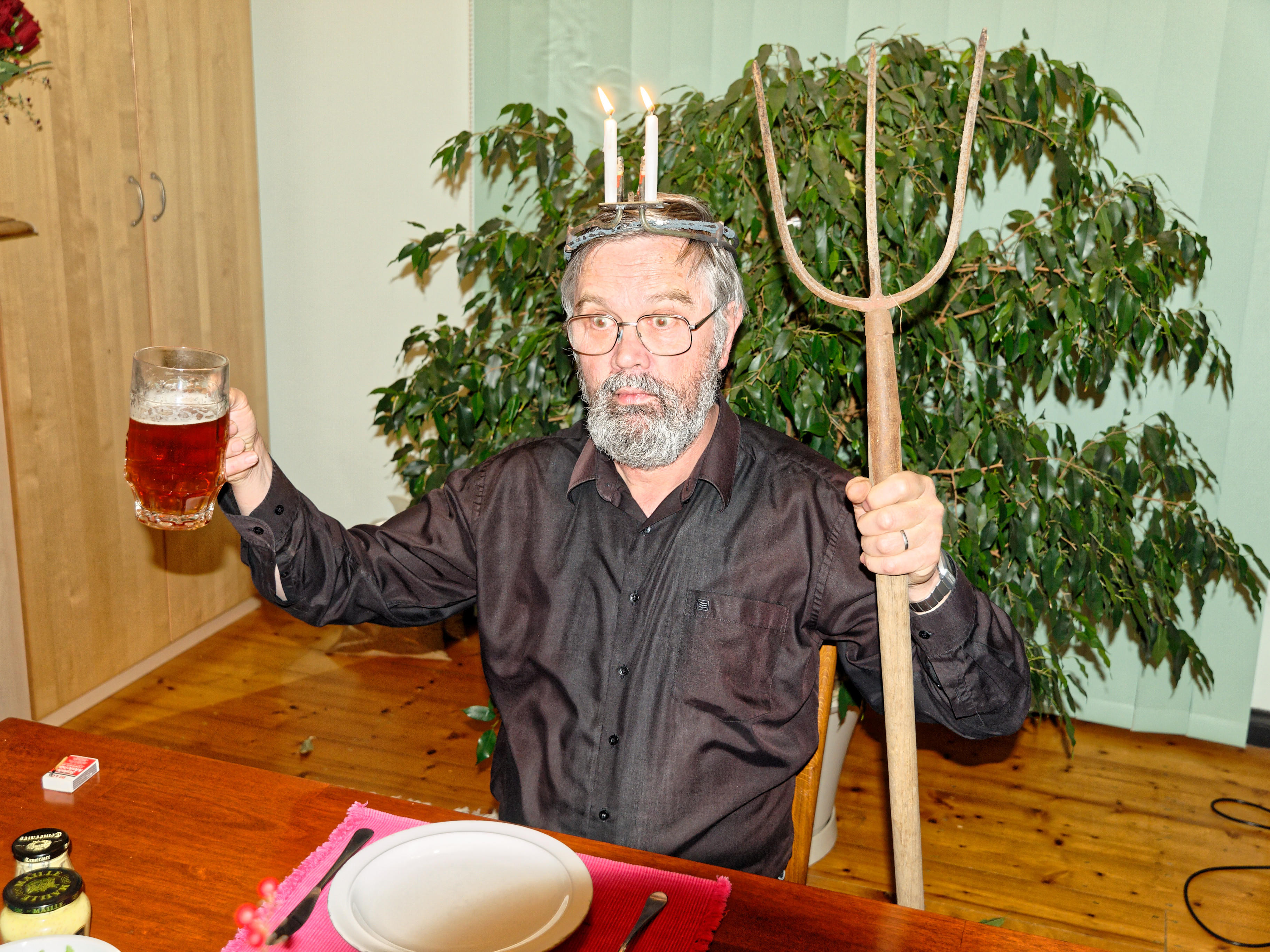
CJ in this morning dressed as an 1850s miner: he was on the way to Sovereign Hill to do some acting work. He had a
whole lot of ideas about how to build the verandah. After he was gone, started writing down
things to buy, and realised that I still had a lot of unanswered questions. So sent
Yvonne off to buy posts for the fences, and we'll finalize
the bill of materials for the verandah tomorrow—hopefully.
Tony from Atmos in today to look at the air conditioners. He confirmed that yes, the
temperature sensors were not in the most obvious place, though he was careful not to say
that the place was stupid. But he investigated elsewhere and came to a more plausible
solution: the control electronics in the external unit were defective, causing it to cut out
every so often. That's inspired guesswork, of course: Fujitsu, like other manufacturers,
provides no tools for confirming the function of the electronics. Wouldn't an Ethernet
interface and a laptop with software make all the difference? In any case, the diagnosis
fits the facts, so he'll replace the controller some time next week and take it from there.
I'm currently sending myself email messages about problems accessing web pages on www.lemis.com, and it's helping me identify a number of
problems. But there are some that have me baffled:
It's fairly clear that this URL is incorrect, so it's not surprising that it fails. But so
is the source URL! How can this happen? Also, the names in this example are very strange.
Is this some kind of breakin attempt? My Apache logs show:
86.96.228.89 - - [01/Sep/2008:14:05:04 +1000] "POST /loucouby/hufuwou.shtml HTTP/1.1" 404 999 "http://www.lemis.com/booquoo/nooquyj.php" "Mozilla/4.0 (compatible; MSIE 6.0; Windows NT 5.1; SV1)"
This is the only entry in the log file for this host, which, as the message indicates, has
no reverse lookup. Clearly it has invented both the referring URL and the link.
More photo scanning today. I'm running out of storage sheets for the negatives.
Yvonne back in the evening with the wood, along with some stuff for the Yeardleys. I
couldn't unload it all without having the Yeardleys' wood slide all over the place, so we
had to leave it there at the Yeardleys' until tomorrow, when David will unpack his stuff and
bring the rest back, at the unearthly hour of 8 am.
Got a lot done, but not everything. We'll continue on Thursday, but at least we're making
progress. Soon we'll be able to plant creepers on the fences.
My lens has been shipped. Or at least, that's what B&H Photo Video tell me, in a well-formatted
message that—of course—includes an HTML version that also looks better than the
HTML on their web site. They include the text:
Please be advised that the above Tracking number(s) were created by
the. B&H shipping department and they will only be recorded by their
respective carriers late in the evening of the day of pickup.
That certainly matched what UPS said: “the
paperwork exists, but we haven't picked it up yet.” But it stayed that way all day.
Still, it's on its way, I suppose. But it's interesting how the availability of tracking
information makes me continually check where it currently is. It probably doesn't matter:
it's now unlikely to make it here by Friday, and it almost certainly will be here on Monday.
Mail from Jon Hamilton about my strange web site errors:
Many proxies will (or can be configured to) do this. For just one example, see http://www.privoxy.org/user-manual/actions-file.html#HIDE-REFERRER. People
configure them to hide the referer for a variety of reasons, most of which are (IMO)
either rampantly paranoid, or simply obstinate. In any case, that would be the first
thing I'd suspect. Why the nonsense target URL? That I can't answer. Just probing to
see what your server sends back? Who knows. Too many people with too much spare time;
that's for sure.
Certainly of interest, but I don't think it explains the whole story. There are too many of
these nonsense things from different places to explain that.
So now we're almost in a position to plant our creepers over the fences. In principle it
would make more sense to wait until we had everything in place, but some of the area has a
concrete surface, and we need to drill holes to plant the plants, so it makes sense to know
where we're going to put them. Off to Ross Creek Nursery, where we found disappointingly
little, though we did leave with a free cutting of
a Pandorea of indeterminate kind.
On to Avalon nursery in Haddon, where we found lots of things, nothing like what we had
planned. We had originally intended to
put jasmine
and clematis on the fences, but we
hadn't reckoned with the time it takes to establish them; it could take up to 3 years before
they covered the fence. In the end decided
on Hydrangea petiolaris
and Hibbertia scandens in the
shade, Hardenbergias and a
combination of Jasmine
polyanthus, Wisteria
sinensis and Wisteria
floribunda for the fences in the sun. They won't grow much faster, though, so rather
against Yvonne's wishes, I've decided to plant hops on the
fences until the other plants take over.
Also brought a couple of other unplanned plants,
a Ginkgo biloba and
a tree fern, both of which Yvonne has
been planning to plant for quite some time.
Back home and did more mulching. Now we have the hops covered, and also one corner at the
north of the garden where Yvonne has planted
her Cycad. We're gradually getting there.
We've borrowed a cement mixer from the Yeardleys. The catch: they've never used it, and I
have to assemble it based on somewhat dubious instructions. They show off our
“metric” system to its best. Although the single sheet “instruction
manual” claims CE conformance, it also states that it's a “5 Cubic foot” unit. What's that in litres?
They don't say, only that the “Batch output.” is “2.5 cf . 123kg“.
The best, though, is the extremely accurate tolerance of the bolts:
7.62 cm! That's got to be an error; the spanner supplied was 17 and 19 mm, but 7.62 cm is
3", which makes me suspect that there's an error in the conversion. Oh, and a cubic
foot is 28.3 litres, so the capacity is 71 litres, indirectly telling me that the density of
freshly mixed concrete is about 1.7.
A phone call from (silence) today, a sure indication that there's a telemarketeer on the
other end of the line. For some reason, many wait up to 10 seconds after you answer before
they say anything. This one, with a powerful American accent, identified herself as Kylie
from Able Australia. I asked her why
she didn't respect the no-call list, and she gave a smug laugh and said “but we're a
Charidy!”. It's true that “Charidies” are not required to respect the
no-call lists, but why should they not do so? There are plenty of charities to choose from,
and I'd donate to one who respects my feelings. As I told her, Able Australia is now on my
“no donations” list. Hopefully charities and other exempt organizations will
get the message and respect the no-call lists, even if they're not required to by law.
I never like pulling out good plants, and this one was just about to flower (somewhat
insignificantly, if last year was anything to go by), but I was surprised how much better
the place looked without it. Tried in vain to convince Yvonne that the Ginkgo should go elsewhere. It stays.
Spent the afternoon planting some of our creepers. The soil in front of the garage is
interesting: here an example of a hole dug with a 30 cm augur:
The orange top soil is some kind of gravel, followed by a thin layer of what might be clay,
and the dark soil is relatively sandy. Hopefully the plants will like it.
Sent feedback to Able Australia about
their telemarketeers, and got an answer, format not fixed:
Greg,
Regarding the do not call registry, if we were to voluntarily adhere to this our database of current supporters would be affected along with
+recruiting new raffle buyers. We have looked into the overall affect of this and it would drastically reduce income
+and potentially make this form of fundraising not viable. Our raffles are conducted by Apple Telemarketing (call
+centres based in Melbourne & Gold Coast) and they have an internal do not call registry, if you would like to go on it
+simply email across your phone number.
Thanks
Chris Stallard
Fundraising Manager
Able Australia (formerly The Deafblind Association)
This reminds me of the tactics of spammers: “Click here to be removed from our
list”. It shows no evidence that Chris has considered that he's annoying people who
might otherwise contribute.
UPS tells me that my lens arrived in Australia at
7:25 AM this morning (or was that 9 April?). That's not
bad. Should be here tomorrow.
Into town this morning to buy some things for the garden. I had planned to do a number of
other things too, but somehow none of them worked out. Into a camera shop to look for
negative albums—that's almost an anachronism nowadays, and though the shop looked like
it would match, all he could find were inserts for 120 film.
Then, just after noon, to the railway station to pick up my lens. It wasn't there, even
though it arrived in Melbourne yesterday morning.
Back home, where CJ was attending to the fences. Had yet another discussion about the
verandah, and I think I'm now in a position to order the materials. With any luck we'll
start the first stage (floor frame and concrete posts) on Thursday. Also did some more work
in the garden. We're training
the Jasminum_polyanthum
and Wisterias on wire, and put in the
first of those. So far nothing much can reach it.
According to the Bureau of Meteorology the weather's no warmer, and it's raining, but we saw no
evidence of either. Spent most of the day in the garden, with temperatures of up to 20°,
and also replaced the chairs and table in the shade area:
There was plenty of garden work to do, including a comprehensive stock-taking of what we currently
have in the garden. With that and the weekly
exterior photos, I took over 100 photos and managed to fill up my 1 GB memory card for
the first time: I don't use the card for long-term storage, and I delete the photos as soon
as they're on disk.
In more detail, finished wiring the fences, planted most of the creepers—only the tree
fern (waiting for the grass in its new bed to die down) and those for the new verandah are
still waiting for completion of the verandah, which probably won't be until the end of next
week, planted the Ginkgo (which I think
I'll call “Ginkyo” instead, because “Ginkgo” isn't easy to pronounce
distinctly from “Gingko”). I still have to sort out the irrigation for the
newly planted plants.
Another nice sunny day, and I had thought of going riding with Yvonne in Enfield State Forest, but Yvonne had some youngsters to ride, and I didn't
feel like going slowly again, so stayed at home and worked on images and things. She showed
up with Chris a bit later:
More work in the garden in the afternoon. I had intended to do the irrigation, but
discovered that I was missing a whole lot of parts, so only did some of it. Instead did a
little more work on the creepers, transplanting a climbing rose, adding another wire to the
south fence, and pruning and tying up
the Wisterias. There's still plenty
more work to be done.
Started re-scanning the slides of the Asia trip. I had
originally scanned these with the ill-fated Canon 9900F scanner, but the quality was
pretty terrible. Part of that, I thought, was the combination of slight exposure
differences and the use of 8 bit colours. Set “48 bit” colour (i.e. 16 bit
colours) and tried again with my
new Epson
“Perfection” 4990 Photo scanner, but it stored the images in JPEGs, which
are only 8 bit colours. The results were no better than with the Canon. How do I get the
thing to maintain the 16 bit colours?
Chris along for dinner. For a change, we had a different viewpoint for the silly photos of
Chris and Lilac:
Lots of things to do in town today, most importantly ordering the materials for the
verandah. In the process looked again through a brochure I got at Home Timber and Hardware and discovered they had
a video tape (so they said, anyway) on the topic, so decided it would be a good idea to look
at that first. Another postponement.
Into town anyway for irrigation stuff, and also picked up DVDs on building pergolas and
decking. Then to the railway station, where my new lens had finally arrived. As usual, the
only information they wanted was the name and address, and I needed no identification to
pick up the package.
It weighs more than 3 times the weight of the 14-42mm lens it's replacing. But it offers
lots of advantages: one stop more light sensitivity, much faster focussing, and wider
field of view. Here the maximum zoom of the old lens on the left and the new on the right:
One thing that the lens photos show is that the lighting is inadequate. That is probably a
worthwhile area for further investment.
This was a general problem for quite some time until I changed my photo processing.
The photos above were processed with ufraw. Reprocessed with DxO Optics "Pro",
they look like this:
Run the mouse cursor over the images to see a direct comparison with the old version.
The change in shape is partially due to the different cropping and partially due to
distortion correction.
All this playing around stopped me from doing much work in the garden. Decided that the
fence in front of the garage could do with more plants, and I had a Pride of Ringwood hop
rhizome that had obviously developed a few children, so dug out what I thought was a small
rhizome:
I'm left wondering whether I dug out the main rhizome and left a child behind; but the rest,
too, looks happy. Chopped this one into four pieces. I wonder how well it will do; it's a
bit late in the year for this sort of thing, and the rose I transplanted yesterday isn't
looking overly happy either.
TV programme woes
I've been using Shepherd for TV programme
information for over a year now, but recently the times have gone haywire. Sometimes, and
only sometimes, they're off by the time zone offset, currently 10 hours in the future.
Frequently it “fixes” itself shortly before the recording is due to start, but
that's too late. Spent some time trying to refresh the data, hampered by shepherd's refusal
to update so frequently:
Shepherd last ran successfully 11h30m ago.
WARNING: Shepherd is being run too frequently!!
Please don't run Shepherd so frequently.
Re-using (existing cached) output for this run.
If you are experimenting/testing and really want Shepherd to fetch fresh data,
do so using the --notimetest setting but please don't make a habit of this.
So I tried that:
=== mythtv@ceeveear (/dev/pts/6) ~ 7 -> mythfilldatabase --notimetest 2>&1 | tee -a filllog
illegal option: '--notimetest' (use --help)
So I tried --help, which didn't help; no mention of --notimetest. After a
bit of experimentation, discovered that the correct incantation is
=== mythtv@ceeveear (/dev/pts/6) ~ 9 -> mythfilldatabase --graboptions --notimetest 2>&1 | tee -a filllog
2008-09-08 16:20:04.799 Using runtime prefix = /usr
...
WARNING: Shepherd is being run too frequently!!

Allowing normal operation due to '--notimetest' override, but please do NOT
make a habit of this.  Overuse strains resources needed by all Shepherd users.
Wouldn't it be nice if it would Just Work? Decided that it was time to download the
programme information later. Spent some time trying to work out how to do that; it's hidden
inside the mythfrontend settings, and it's not a time, just a start hour and an end
hour. Set it to start at 9:00, which is still before I'd look at the data.
Callum Gibson did some playing around with mencoder to create an AVI “slide
show” of one of my sequences of house photos. It's interesting, but it shows
the necessity of normalizing the photos first. The incantation is:
He also notes that you need to include an additional “fake” frame at the end to
get the last real picture to display, and that it fails silently if all images are not the
same size. That's an issue because of the strangenesses about the raw image size: when I
changed to using raw images, my JPEG image size changed from 3648x2736 to 3720x2800.
Understanding UPS tracking information
So finally my lens is here. It took over a week, most of it spent in New York (origin) and
Melbourne. Now I can publish the tracking information, which would have been enough for
anybody else to pick up the lens. In fact, it wouldn't even be necessary: all they wanted
was the name and address, and no identification on pickup. But where was the lens all this
time? UPS doesn't make it easier to compare times, writing things in reverse chronological order and using local times at each
location, but it seems that it's spent:
28 hours, 17 minutes in transit from the
vendor to UPS' local depot in New York.
4 hours, 44 minutes in transit in New York.
2 hours, 22 minutes en route to Louisville KY.
2 hours, 52 minutes in Louisville.
10 hours, 57 minutes en route to Honolulu HI.
2 hours, 25 minutes in Honolulu, leaving at “8:52 A.M. 09/03/2008”.
Now things get complicated: the next four entries are from Ascot Vale, near Melbourne
airport. The first one is at 7:25 on the following day, and the last at 9:46, stating
“RELEASED BY CLEARING AGENCY / NOW IN-TRANSIT FOR DELIVERY”. It's not until
you factor in the time difference between Melbourne and Honolulu (20 hours) that it
becomes apparent that these times are between 2 hours 33 minutes and 4 hours 56 minutes
after the departure scan in Honolulu. Clearly the package can't have been in Melbourne
at the time, but it's not immediately apparent until you convert the times to something
comparable.
My best guess is that these actions were purely paperwork, handling the import issues,
while the package was still under way. That makes perfect sense, but the text
“NOW IN-TRANSIT FOR DELIVERY” is very misleading under those circumstances.
Finally, at 15:07 on 4 September, the package arrives in Sydney and is scanned, 10 hours
and 15 minutes after leaving Honolulu. Presumably a significant time elapses between
departure scan and departure, and between arrival and arrival scan, so this, too, makes
perfect sense.
Now things start to slow down. 17 hours and 53 minutes later, the package has made the
1000 km from Sydney to Melbourne. A further 10 hours and 46 minutes later, at 19:46 on
Friday, 5 September, it has a departure scan, a total of 28 hours, 39 minutes after
arriving in Australia.
That's the last thing on the tracking information. There are frequent busses from
Melbourne Airport to Ballarat, including on Saturdays, but the package didn't arrive until
Monday morning, at least 60 hours later. I picked it up at about 13:30, 65 hours, 45
minutes after it left Melbourne airport and 154 hours, 40 minutes after the original
paperwork was received.
So, it seems that the shipment times break down like this:
Vendor to UPS, New York: 28 hours, 17 minutes (18.3%).
UPS New York to Sydney: 31 hours (20.0%).
Arrive Sydney to leave Melbourne: 28 hours, 39 minutes (18.6%).
Leave Melbourne to pickup in Ballarat: 65 hours, 45 minutes (42.6%).
What should I make of that? Clearly the last leg of the transport took nearly half the
time. But this is UPS' cheapest rate, and I still got it within a week. You'd think,
though, that they could have had it here on Friday.
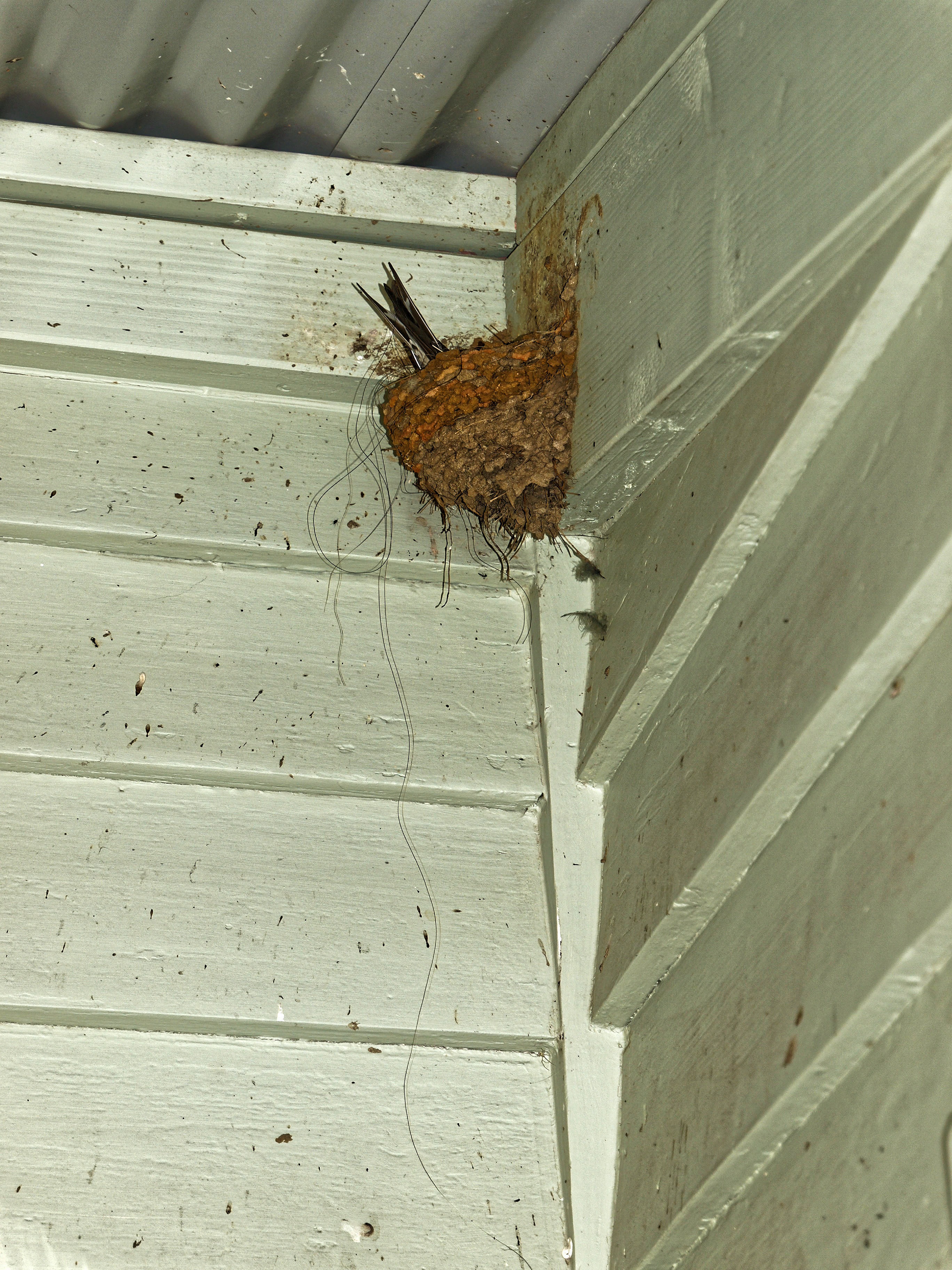
The new nest isn't nearly as large as the old one, but it's surprising how much mud they
have been able to move. Now we're wondering what we should do. On the one hand, they make
a pretty terrible mess, but on the other hand they're just trying to survive. We're
thinking of putting something like a litter tray underneath it.
More irrigation stuff today. Somehow it was particularly frustrating, probably because of
the amount of digging I had to do. In the end only got the espalier in front of the garage
and side one the north entrance, where we're
planting Jasminum polyanthum
and Trachelospermum
jasminoides. The rest will have to wait until tomorrow.
Into town today to hear the results of the blood test I had 8
months ago—I should have these done every three months, but I
positively HATE waiting hours in the waiting room of the Eureka Medical
Centre. It takes half a day just to go to the doctor. I have made numerous attempts over
the months, but I've always tried to combine the journey with other work, and there just
wasn't enough time.
Today I registered and then went out again to make an appointment to have my eyes looked
at. There should have been a one week wait, but by chance an appointment had just been
cancelled (that seems to happen a lot), and I was able to be looked at immediately.
Result: eyes have changed, but it's not clear what kind of new glasses I need. She was
actually going to prescribe something about 0.5 dioptre weaker than the current glasses.
I need to think about that one.
Back to the Medical Centre and finally, after another 45 minutes, got looked at by the wrong
doctor, who had accidentally taken the details from his colleague. Nothing much to say
about results 8 months old, I suppose, so had another blood test immediately. I need to
stick to my schedules.
Back home and did some more irrigation stuff, also transplanted
another Chlorophytum comosum into some hanging
pots:
I'm thinking of buying a new flash unit for my camera. The one in the camera (Olympus E-510) is pretty
useless, and I consistently get underexposed photos. I should remember to set +0.7 EV
compensation, but I usually forget. My external flash is a Mecablitz 40 CT 4, over 20 years
old, and though it's (surprisingly) at least as bright as modern units, it lacks a lot of
the modern whizz-bang.
Or does it? I'm currently looking at the Olympus
FL-50R and the Mecablitz 58 AF-1 digital (what a mouthful). And I can't work out what they do
that's different. There are few reviews, and those that I have found don't give me the
feeling that the authors really know what they're talking about. So I've started to read
the instruction manuals.
The Mecablitz manual, conveniently written in 6 languages, starting with German and
continuing in a sequence that doesn't obviously match the descriptions on the first page
(English starts on page 84), starts by talking of the flash modes: TTL flash mode with
measuring preflash, TTL - flash mode with high speed synchronisation HSS, Automatic flash
mode, Manual flash mode, HSS Manual flash mode with high speed synchronisation HSS, and
Stroboscope flash mode.
What does that mean? I know what TTL means—“Through The Lens”, the
metering system pioneered by the Pentax Spotmatic. But what does that have to do with flash
units? The manual explains:
The TTL flash mode with measuring preflash is a further development of the standard TTL
flash mode of analogue cameras.
That's really helpful. It also suggests that I look at the camera manual, which gives me
the added information when connecting external flash units:
The external flashes communicate with the camera, allowing you to control the camera's flash
modes with various available flash control modes, such as TTL-AUTO and Super FP flash.
Again, no mention anywhere in the manual of what these terms mean, though it suggests that
“Super FP” is the feature I've heard about where the flash unit flashes several
times during the picture to allow illumination of the complete subject at shutter speeds
where the slit width is less than the full image. But TTL? Acronymfinder returns 28 definitions,
including “Through The Lens”, but nothing else that relates to photography. So
maybe it does mean “Through The Lens”. Maybe a description of how the camera's
exposure meter cooperates with the flash? Who knows? They're certainly not telling. As
usual, I had to go to Google to get some useful links. In particular, Toomas Tamm's Electronic Flash
Information states what should be in all the manuals:
TTL measures light reflected off the film plane during flash exposure. Once enough light has
reached the film for proper exposure, the flash pulse is cut short.
So, problem solved? No. What's “TTL-AUTO”? Are Metz's “TTL - flash mode
with high speed synchronisation HSS,” and Olympus' “Super FP” the same
thing? How can I choose a flash unit this way? The instructions I have are specific for
Olympus, but they don't tell me whether the unit will work on my camera. Instead, I read:
This flash unit is suited for: Olympus - Digital cameras with TTL flash control and flash
socket system, as well as the compatible digital cameras from Panasonic and Leica. This
flash unit is not suited for other brands of cameras. Also take a look at the image page at
the end of the manual.
The image page at the end of the manual shows a photo of a factory, presumably Metz. The
German version is clearer: the manual is designed to have a fold-out image at the end. It's
not clear what belongs there. But probably it will work on my camera, but I'd hate to be
wrong.
When we moved in, we had dog runs, but Yvonne didn't want to
put our dogs in them, so we dismantled them. How times change.
Somehow didn't get much done all day. I really should be tidying up not just the shed, but
the house as well. Once our hay is finished—a week or two—we'll have more space
to move.
Finally I'm in a position to order the wood for the verandah! Into town to Whiteheads to
order the timber, spending at $2200 odd, nearly double what I had expected. In particular,
the roofing was much more expensive than I had expected. Still, it's a relief to have the
stuff under way—should arrive on Tuesday. I wonder what surprises we'll have.
My house photos are due again tomorrow, the
first time with my new ZUIKO DIGITAL ED
12-60mm F2.8-4.0 lens. One problem with the Olympus system (at least the E-510) is
that the system doesn't indicate the focal length at which a photo will be taken. For that,
you need to take a photo, and then it'll report the focal length from the EXIF data, rather
sillily with a precision of 0.1mm, though all reported focal lengths have been integers.
Previously, many of the photos were taken at 14 mm focal length. On the ZUIKO DIGITAL ED
14-42mm F3.5-5.6, that's easy to set: it's the widest setting. But how do I set it on
the lens? The scale isn't very precise:
So I tried a series of test shots to compare the scale with the focal lengths reported by
EXIF. The results were interesting:
Not surprisingly, the shortest focal length was reported as 12.0 mm, and the
longest as 60.0mm.
Also not surprisingly, 14.0 mm is located about a third of the way between 12 and
18 mm.
Some integral values are missing altogether. Thus, although there are markings for 25
mm and 50 mm, there's no way to set these values: the following pairs of photos were
taken round 25 mm and 50 mm respectively. As they show, they're only minimally
different. But the EXIF reports focal lengths of 24.0 mm, 26.0 mm,
49.0 mm and 51.0 mm respectively:
Running the mouse cursor over the image exchanges it with its partner. The differences are
because the camera was not on a tripod.
None of this reflects directly on the lens, just the way the information is reported. On
the whole I'm happy with it, despite strangenesses and the fact that it focuses beyond
infinity (see image).
Also more investigation of flash units, not made easier by yet more web site breakage:
There are many things to think about there, so started a web page on the subject. This may not be of
much use to others (certainly in its current form it's pretty useless to anybody), but it
helps me focus my thoughts.
Gradually it's becoming more like spring; for the first time this spring the temperatures
exceeded 20°, and we finally got round to go riding in Enfield State Forest, something that
we've been planning to do for months, almost since we first came here.
Things didn't go smoothly: despite my religious attention to knocking out boots before
putting them on, I somehow managed to miss a whole lot of mouse droppings; clearly we need
to pay more attention to where we store the boots. While taking them off to clean them out,
one of the zippers broke, and I had to ride in short boots (fortunately I hadn't come in
thongs). Then Yvonne forgot to put on her helmet, and we had
to go back to get it. Towards the end, Darah tripped and nearly fell; I wasn't so lucky,
but neither of us were hurt.
Still, it's pretty there, nothing
like Kuitpo Forest in South
Australia. Kuitpo is a commercial forest, where they grow
mainly Radiata Pine, and all the
paths are straight. Enfield seems primarily for walkers, and there are a number of paths
which have a “no horses” symbol:
This is the right time of year for spring wildflowers, of course, and we saw plenty, enough
to make us think that they have been planted. In particular, there
were Hardenbergia violacea
and various unusual Grevilleas, and a
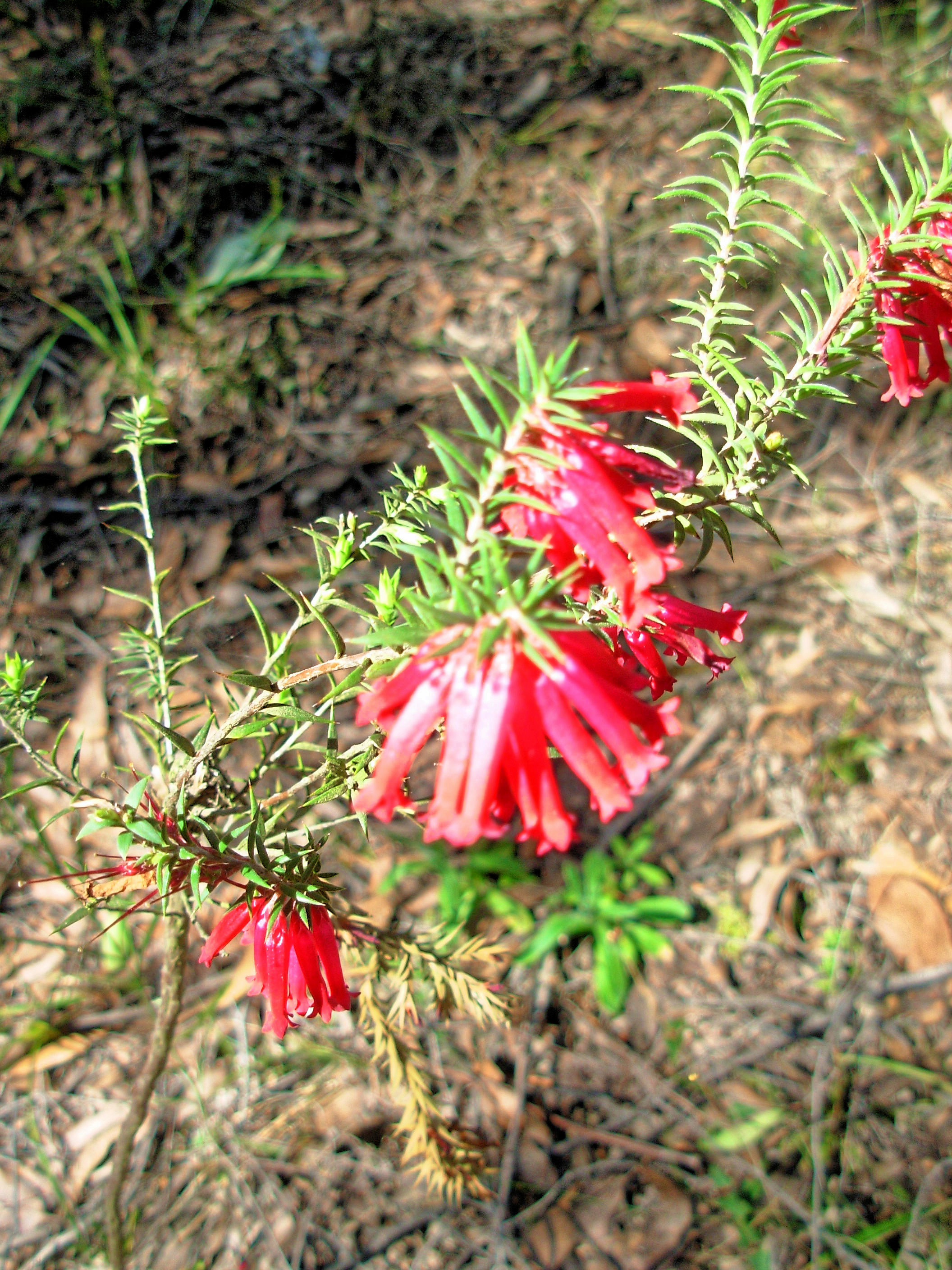
plant with small trumpet-like flowers that I think I've seen before, but can't identify:
Discussion on IRC this afternoon, where I voiced one of my standard answers to these silly
airline security questions:
Security drone: “Do you have anything which is a weapon, which looks like a weapon,
or which could be used as a weapon?”
groOgle: “That depends on your imagination”.
“Netherby”, one of these nameless people on IRC, came up with an imaginative
example:
<Netherby> <groOgle>: Security drone: "Do you have anything which is a weapon,
which looks like a weapon, or which couuld be used as a weapon?"
--> Head-butts drone.. "So should I just leave my skull at the
service desk?"
Tried to barbecue in the evening, with only moderate results. Once again it's really windy,
and that's death for barbecues. And while I was at it, the provisional screw holding the
lid (the original got lost during the move, and we haven't found a replacement) fell off.
Somehow not the most pleasant of days.
What horrible weather! There were heavy winds the whole day long, blowing over a number of
plants, such as this Chinese Cabbage that I was hoping to let go to seed:
As a result, we barely went out of the house until the evening. But yesterday's warm
weather has, well, not borne fruit, but at least started some of our more reticent plants
growing:
This is the Sapphire Dragon
that we bought in April. It's deciduous, but until a
couple of days ago it showed no sign of life whatsoever, and we were beginning to think that
it was dead.
I had intended to brew today, but the incomplete brewing equipment completely turned me off.
Forced myself anyway, but by the time I had crushed the grain, it was nearly 1 pm, so put
the rest off until tomorrow.
It is almost universal across manufacturers for AF lenses to focus past infinity. Although
I have seem explanations about thermal expansion, this doesn't ring true to me as MF
lenses would also suffer from thermal expansion and they don't focus past infinity. I
believe the reason is to prevent the AF motor ramming the focus mechanism up against the
infinity stop. AF mechanisms can sometimes “hunt” a bit past best focus,
particularly in low light.
That's an interesting thought. This particular lens is supposed to have the fastest
autofocus of any lens, so possibly this is a consequence. But more to the point, it's the
only digital camera lens I have that even has a focus scale (and a pretty useless one
at that). The others don't have a direct focus ring: it's all controlled by the camera's
firmware. It would be nice if the camera would indicate the distance it had focused on in
the viewfinder.
Spent some time trying to write my page on
electronic flash, somewhat hampered by the fact that I haven't decided what I want it
to be or to whom I should aim it. It's surprising, though, how much confusion seems to
exist. Juha Kupiainen had difficulty understanding that guide numbers have nothing to do
with the camera, nor with the lens. Spent some time trying to describe the basics, but
somehow it's particularly difficult. Few people seem to understand why there's a maximum
shutter speed for flash with focal plane shutters. Spent some time taking some sample
photos at 1/1000, 1/500, 1/400 and 1/320 s to show the way the shutter gets in the way of
the flash:
That's interesting in itself: the Olympus E-510 is rated at
1/180 s for flash, but it seems to work perfectly at nearly double that speed. The trouble
is that you need to set it to manual to use the fact.
I wasn't excluded from misunderstandings about flashes, though: there's this new
“FP” mode, where the unit emits multiple flashes at short intervals during
exposures, thus getting round the problem above. But it wasn't immediately clear that the
illumination intensity can only be a fraction of that at slower speeds, since only the light
from one flash illuminates a particular part of the photo. And I still don't know how this
mode manages to expose the picture evenly. Maybe it doesn't; I'll have to suck it and see.
Finally got round to brewing today; once again it wasn't much of an issue except for the hot
water. I wish I could find a suitable vessel.
One unexpected problem was my temperature control hardware: for some reason, the temperature
readings were all wrong, and sometimes they all seemed to be the same. I suspect that this
was the result of the overflowing fermenter from the last
brew, which had spread wort all over the connector to the temperature probes. Took it apart
and cleaned it, in the process fixing a damaged connector which I think happened when I took
it apart. After that, the fermenter probes worked, but the other two (ambient and room)
both showed the same incorrect values. More work ahead.
The weather's still terrible; had a lot of hail in the afternoon, which took several hours
to thaw. When will spring come?
Peter Jeremy commented on one of the plants I saw on Saturday:
He suggested that it was
a Epacris impressa, but
there's only a drawing on that page, and somehow I can't relate easily to that. Found
another description on the ASGAP web site, which confirms that it's Epacris
impressa, the Victorian
floral emblem. That seems rather fitting, except that the emblem has pink flowers,
and this one has red flowers, so it's the Bega variety—and Bega's in New South Wales.
High time to put the cement mixer together. I've already commented on the appalling
instructions; but that was before I tried assembling it. The “7.62cm nut and
bolt” proved to be 6.57 cm long:
The instructions are positively an intelligence test, and it seems that I failed. Called up
the company, only to find that they had been sold out some years ago—it proves that
the mixer was manufactured in November 2003—and there was no assistance available.
Continued for some time and finally got the thing assembled, apart from the tip lever. The
instructions say:
Insert tilting handle into the handle mounting tube add secure with large cotter pin.
What mounting tube? I didn't see one. This is the first mention, so it can't be a lost
non-attached component. I'm baffled.
In the afternoon, played around a bit with Google Chrome. It only works on Microsoft, and even there the “installs in
seconds” proved to be inaccurate; it takes just as long as anything else. And any
hope I had that they might deal with issues of presenting only small parts of texts, or
overflowing boxes, were dashed from the start:
It's certainly minimalist. The text size is tiny, of course, and I can't find any way to
change it. It also talks about “tabs” as the only method of displaying more
than one web page at once; no mention of additional windows. They exist, though, and I can
get them via the same method as with firefox. I had hoped that Google would lead a
new way away from the current breakage so prevalent in the web—their own web site does
a good job—but so far I don't see any advantage in Google Chrome. Maybe somebody can
persuade me when it's out of beta.
The best kept secret: what's on TV?
My TV guide (“EPG”) is still full of gaps. About the only one I know that looks
reasonably complete is ebroadcast. Considered
extracting the data from that page and discovered that each entry in the table looks like
this:
They're encrypting the information! You'd think that nobody wanted you to know
what's on TV! Yes, people sell this information, but ultimately it's intended for the
consumer, and currently I don't know what's on TV. What kind of nonsense is this?
As if to prove the point, we missed “Midsomer Murders” on ABC for the second
week in a row, and on Sunday we were supposed to get an episode of “Gardening
Australia”. In each case the programme was replaced by sport programmes, without any
warning. As of today, the ABC
web site claims that they have broadcast the programmes in question. Who are they
supposed to serve?
While on the topic of difficulties with TV sites, SBS is at it
again with their calendar:
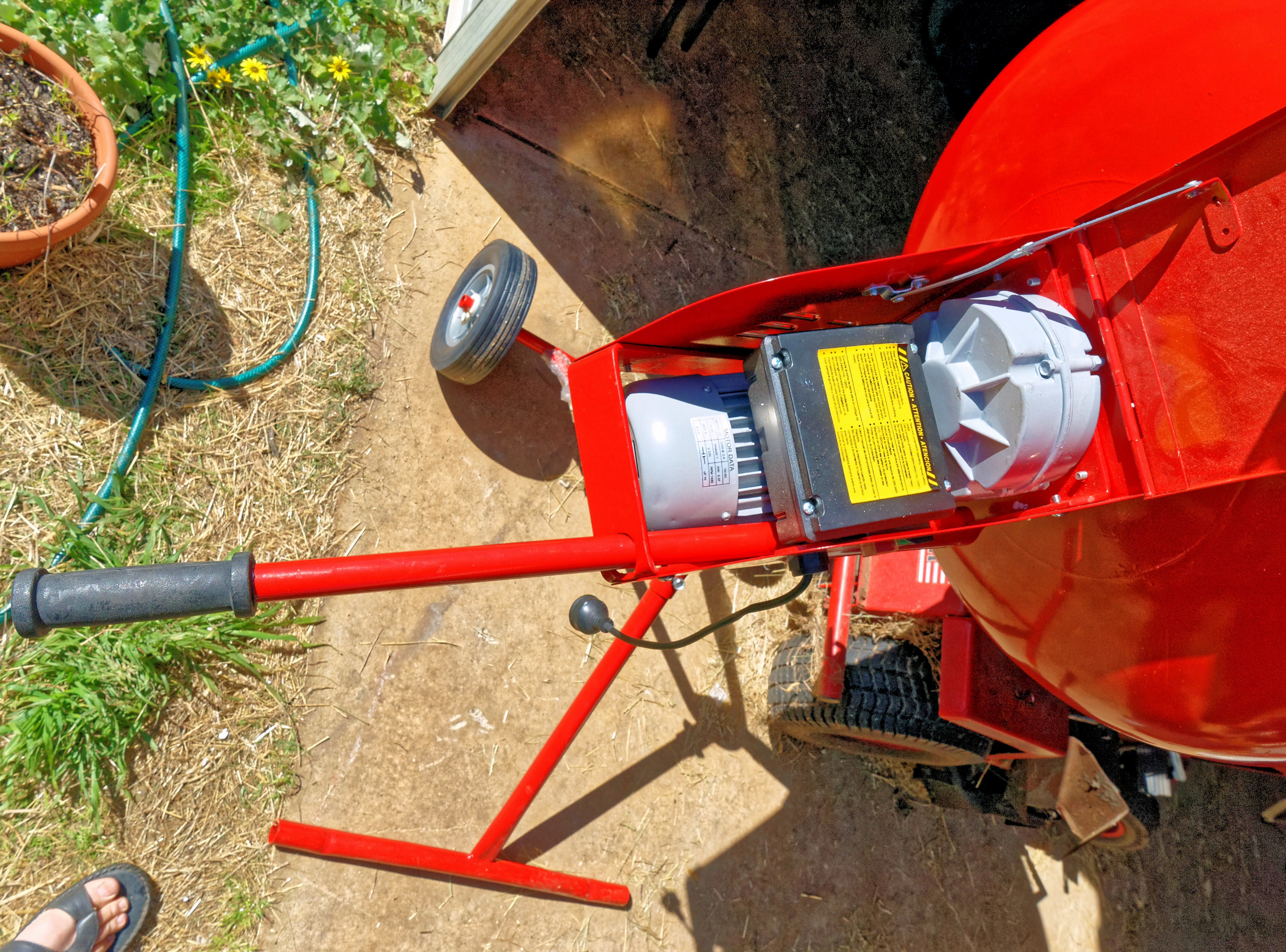
Finally we have started building the verandah! First thing we looked at was the cement
mixer, and finally found where to insert the tilting handle. Nothing to do with a mounting
tube: it slid in through a hole next to the motor, where it had to be tilted to miss the
motor:
First did some discussion about how to tackle the task. One of the issues was that there
are a number of pipes in the area, and CJ suspected a septic tank. Spent a lot of time
digging test holes. We didn't find an active septic tank, though the plans for the
extension indicated that the extension would use the existing septic tank. It seems that
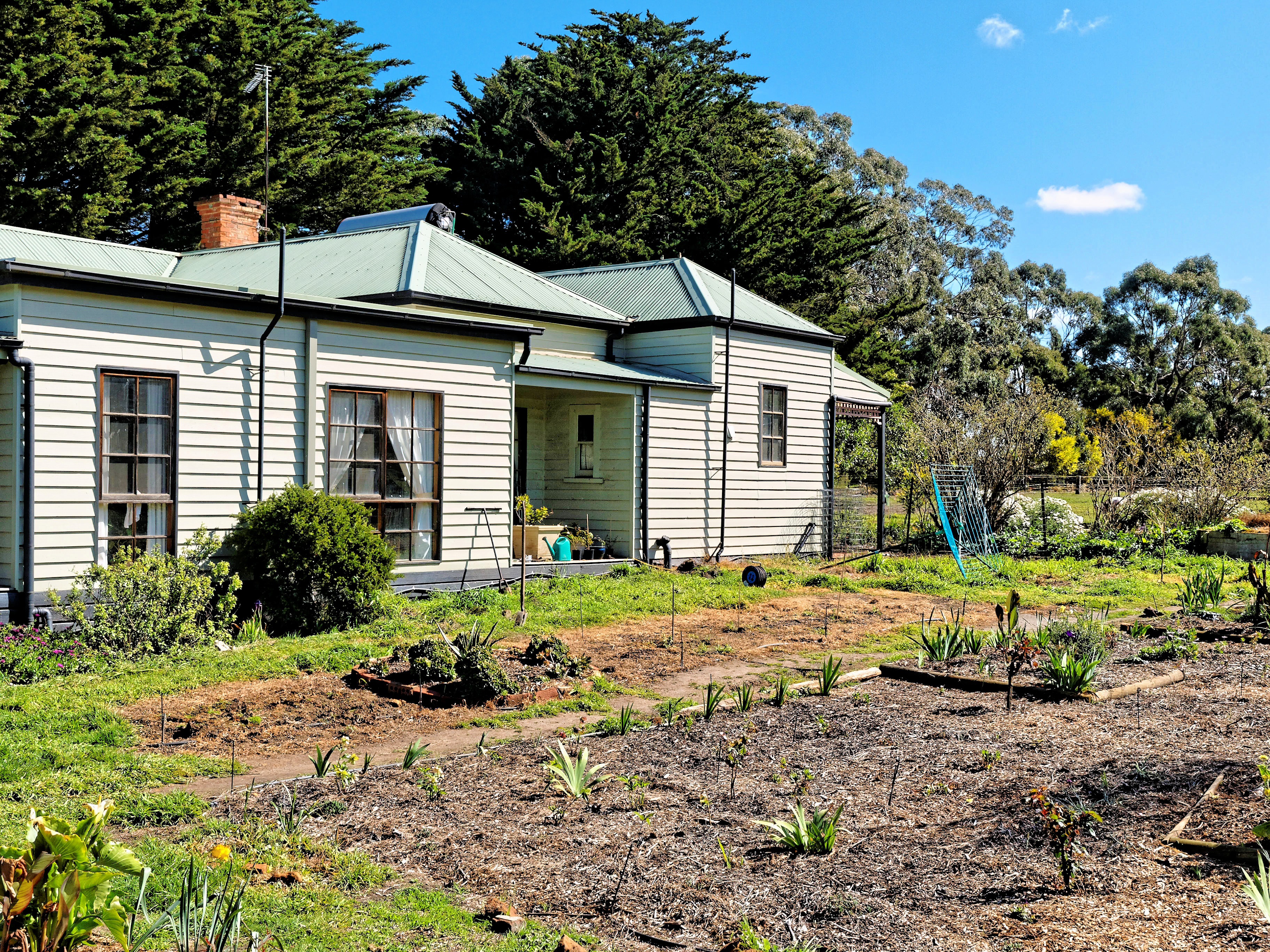
there used to be an outside toilet to the right of the house in the photo above, and we
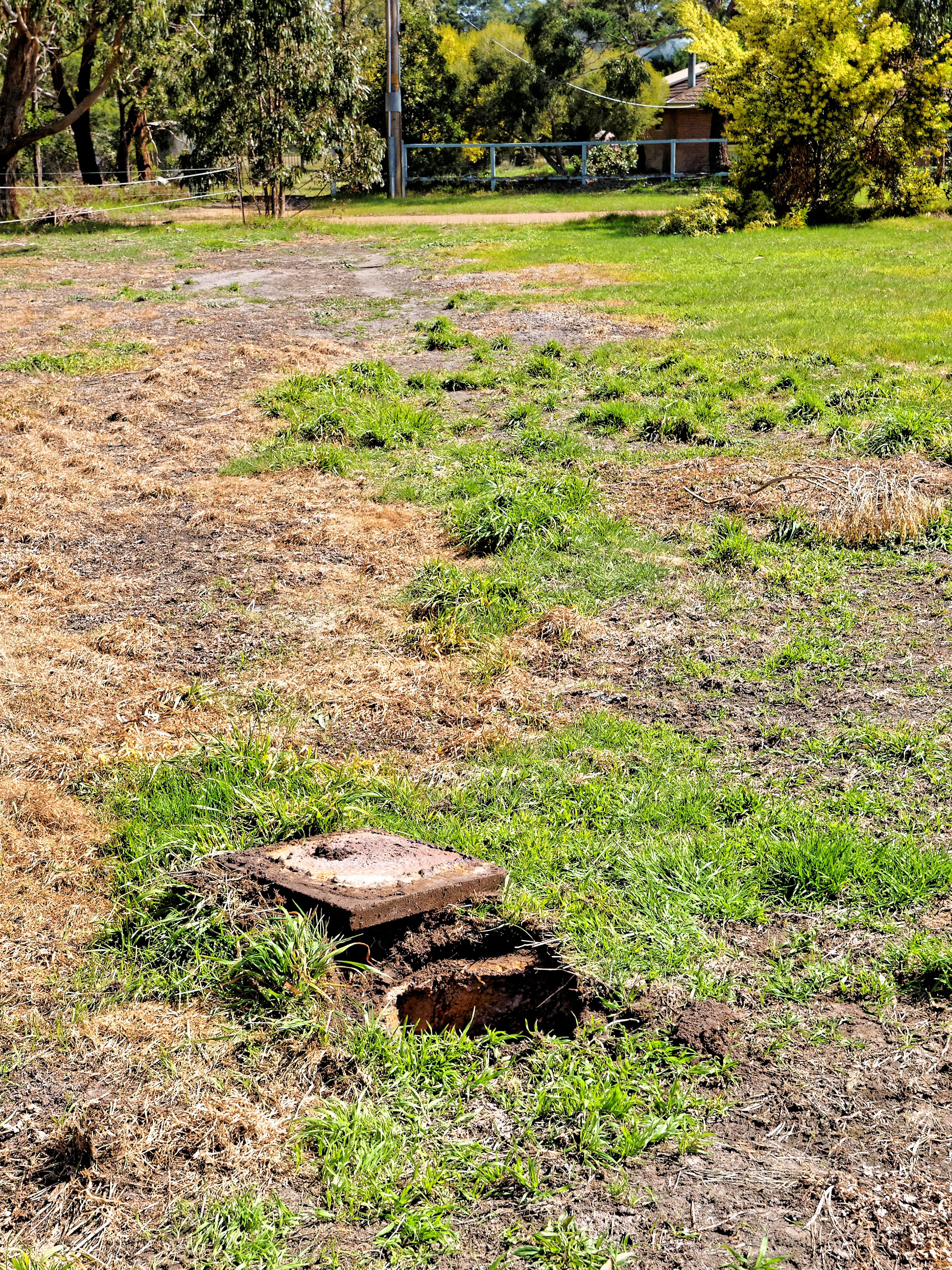
thought there might be a septic tank there, but there were pipes in all directions:
Also found the soakage, quite a way from the tank and on a feature that I had already noticed in Google Maps. It continues down across the road on a bearing of about 260°; but could
part of it be the soakage? That's the way it points.
Apparently it was part of the old septic tank; clearly it wasn't in use, so the only issue
was that we had to slightly move the position of a post.
By the time we started doing any work on the verandah itself, it was 14:30, and then Tony
Nesci came along with the replacement circuit board for the air conditioner. In the
process, he discovered something disconcerting about the old one:
One of the chips was covered in ants. Why doesn't Fujitsu ant-proof their units? It's as
simple as a water gap. But were they the cause of the problem?
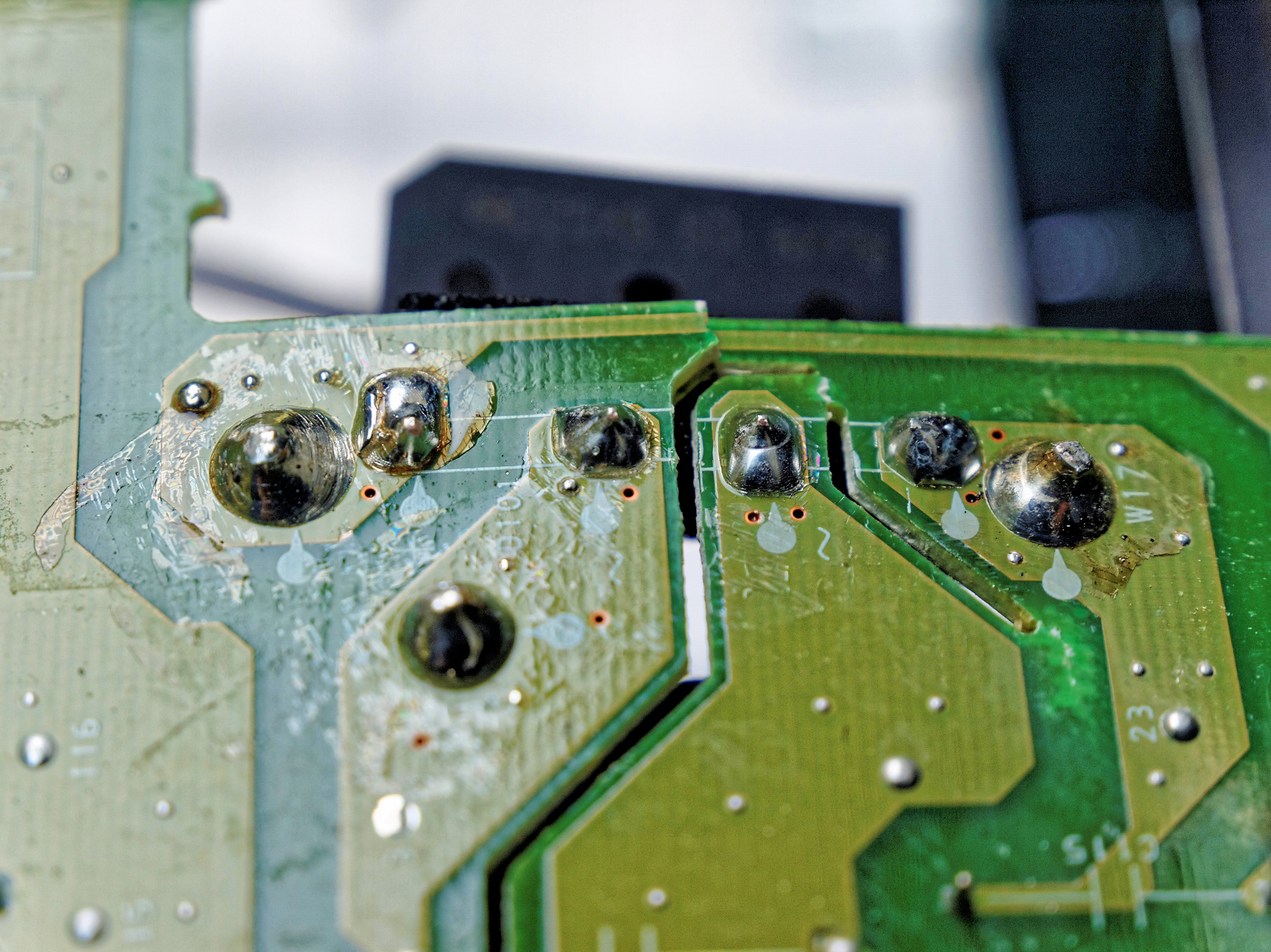
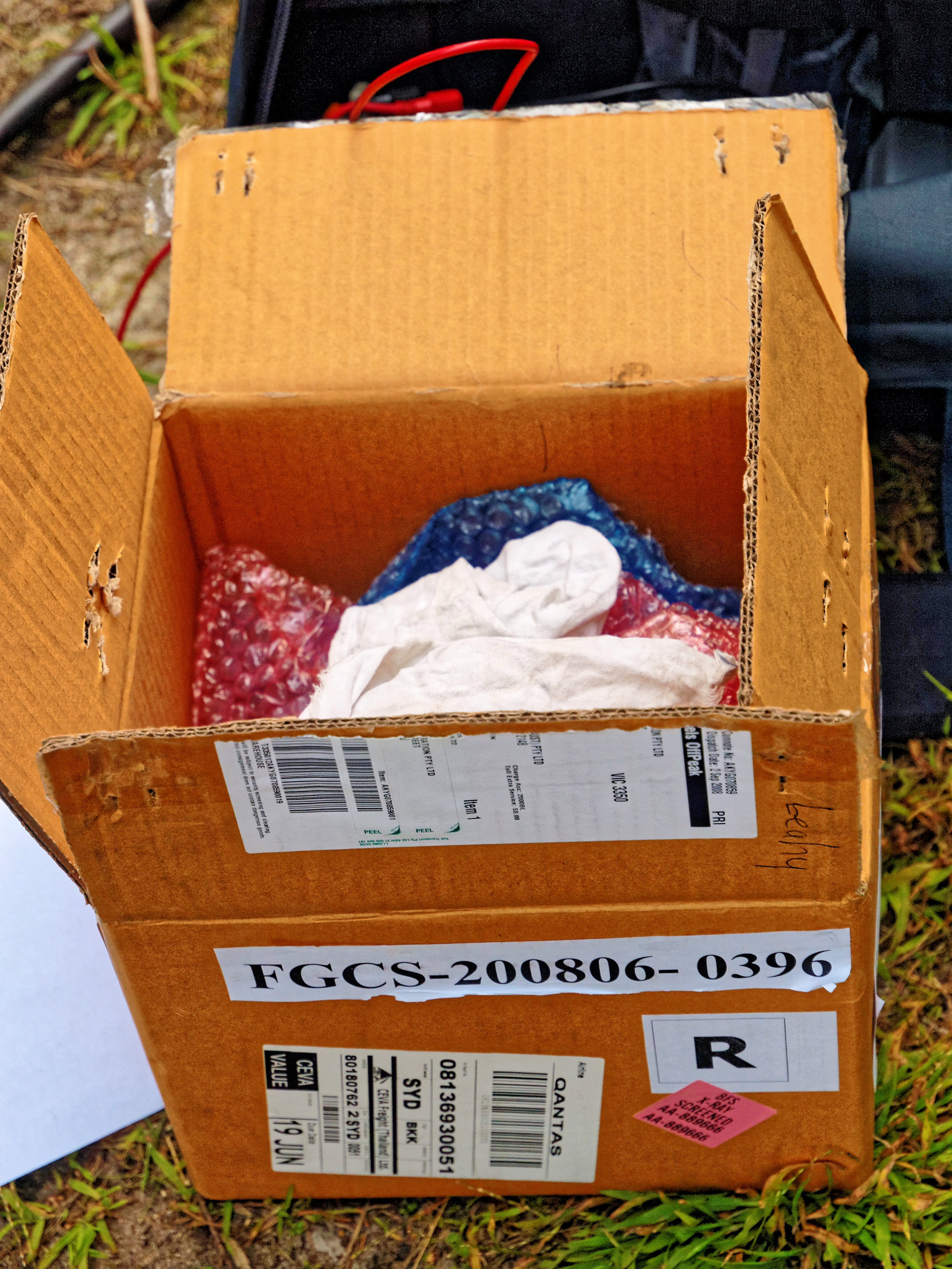
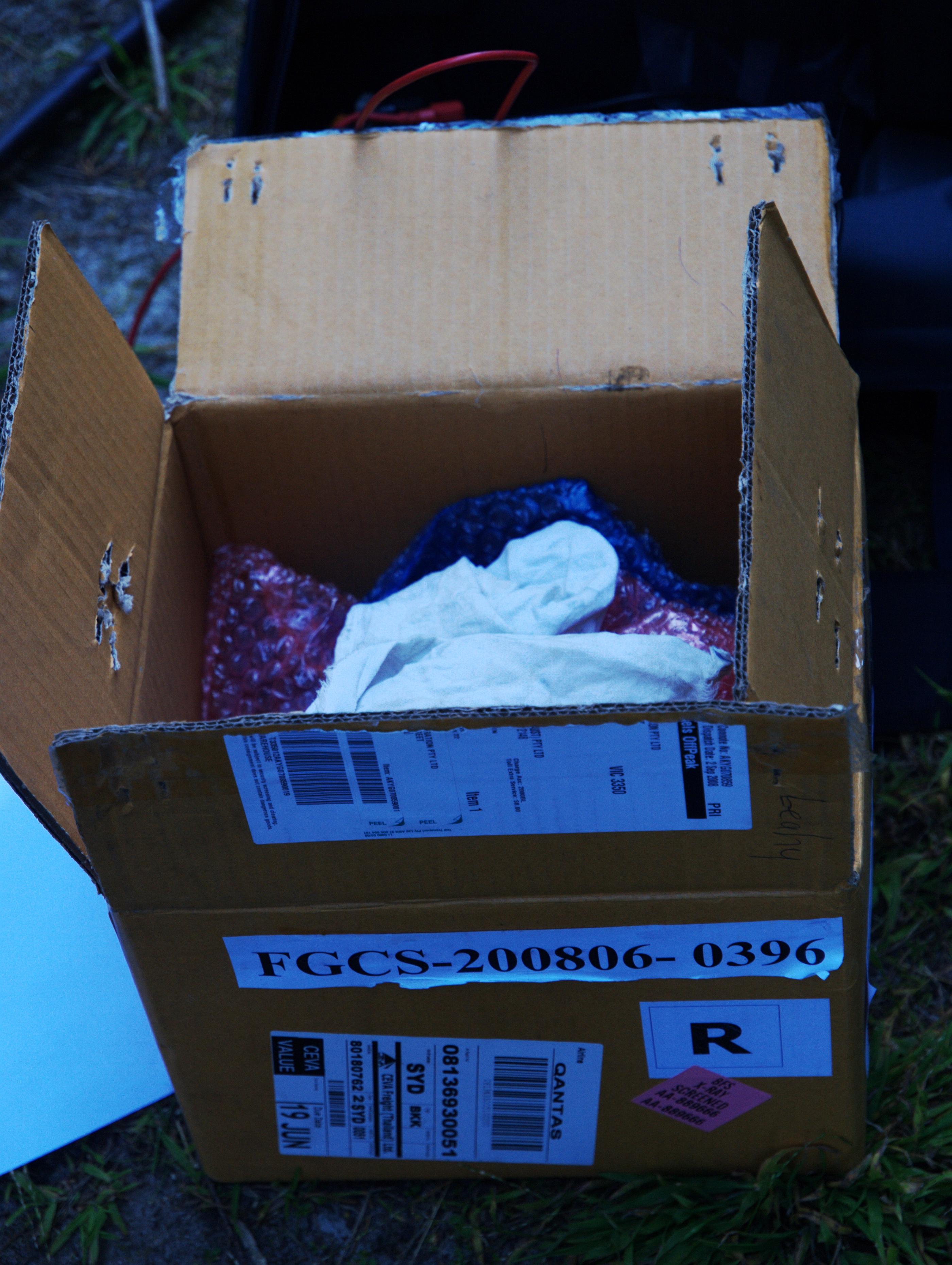
First, we had to install the new board. That proved to be damaged, presumably because it
had been shipped in a completely inappropriate container:
That and the obvious construction deficiencies certainly don't give me the warm fuzzy
feeling that they know what they're doing. But it looked as if the damage wouldn't stop it
from working, so Tony installed it. We were able to confirm that it made no change
whatever: the problem was still there, so neither the ants on the old board or the crack in
the new board had any effect. In the process, discovered that there are 4 LEDs on the board
to display error status (bottom of the photo), but that nobody knows what they mean. What
kind of nonsense is that? Tony did a bit more checking, but effectively his hands are tied
because Fujitsu doesn't have adequate error reporting techniques and policies.
Continued with the verandah, and got as far as putting the first beam in place:
By then it was 17:48, so we left the rest for tomorrow.
Spent an inordinate amount of time processing the photos. I don't know if it was the light
or some other factor, but my camera got its white balance completely off. Here the balance
before and after processing:
Apple have released another security update, and for some reason “software update” couldn't download
it; it didn't get beyond about 100 kB before timing out and presenting me with
a STUPID error message telling me to check whether I have an Internet
connection. Confirmed that other people weren't having problems, and set off to download it
manually.
The system doesn't fill you with confidence: there was no certain way to correlate the
security update in “software update” with the security update on the web site
(which didn't even mention the recent updates on its main page). So I
went looking at the sizes. According to “software update”, the update is 69.4
MB in size; but the update on the web site was given as 67.68 MB in size. That would be
sufficient difference to assume that it's a different update. Did a quick calculation to
see whether one was MB and the other millions of bytes, but that's not the case. Downloaded
it anyway (without any speed problems) and found that it's 71076719 bytes long. That's
69411 kB (“69.4 MB”) or 67.78 (“67.68”) MB. What a mess! Is it so
difficult to quote sizes correctly and consistently? At least it installed correctly, but
if I didn't replace the kernel, why did I need to reboot? It also appears to have reset my
display size to minuscule 832x624—how come?
In that connection, it's interesting to note that Apple not only follows industry tradition
by having broken web site layout, but present it even on their own machines running their
own web browser (“Safari”):
This is a standard Apple display, with no tweaks on my part, so nobody can blame my
environment for the breakage. Of course, maybe most people don't see any breakage there:
it's “modern”.
The issue isn't just aesthetic. The security update description tries to include ah SHA1 digest, but fails. Here the
rendition under Safari and under firefox:
In the first case, the digest is truncated; in the second, it overlaps everywhere. Neither
is usable. I've tried changing the Safari display, but I can't get it to display the
complete SHA1 digest.
Fortunately, that was the last one, and the rest of the day's work went relatively smoothly,
though laying out the beams accurately and putting them together with the posts took quite
some time, but by 17:40 we had everything in place, ready for concreting in tomorrow.
We've been trying to get rid of the swallows in the verandah area for some time, but when
they rebuilt their nest so quickly, we felt a little guilty, and are half thinking of
letting them stay. Today, though, we saw a strange sight:
The swallow seems to be head down in the now-completed nest, but it's dead. How did that
happen? I want to leave it there for a day or two to see what the other birds do.
CJ over early this morning, and we made relatively short work of aligning the beams and
concreting them in. The cement mixer certainly helps, but it's a bit of a pain to work
with, especially since the drum is so high up.
I suppose it's a typical situation that pre-mix cement comes in 30 kg sacks with lots of
text written on them, including the requirement that the sacks should be lifted by two
people, since they weigh between 16.1 and 40 kg, but the only indication about how much
water to add was “the least amount of water to obtain the correct workability”.
By experimentation, decided that you need about 2.75 litres of water for 30 kg of cement.
We were finished by 11:30. Spent the rest of the day catching up on other things, including
scratching my head about a stuck fermentation.
Also a bit of work in the garden. Despite the continuing cold weather, plants are gradually
growing again.
Saturday is photo taking day, and in the past
few weeks I've spent quite a bit of effort in improving the photo quality. I think it
shows, though there's plenty more to do, but it takes up a considerable part of the day.
On a recommendation on the Australian Craftbrewers' mailing list, “roused” the
yeast in my stuck brew, which may have had an
effect, if the ambient temperature of the fermentation fridge is anything to go by. At the
height of a normal fermentation it can drop to 1.5° to 2° below the wort temperature; in
this one, it was barely 0.1°, but now it seems to be widening to about 0.3° to 0.4°.
Hopefully that'll continue.
A bit more work in the garden, mainly weeding. If only the weather would get warmer! In
Sydney it hit 33°; in Ballarat it was 15°.
Off riding again today, this time in our own forest. Our horses have been going unshod
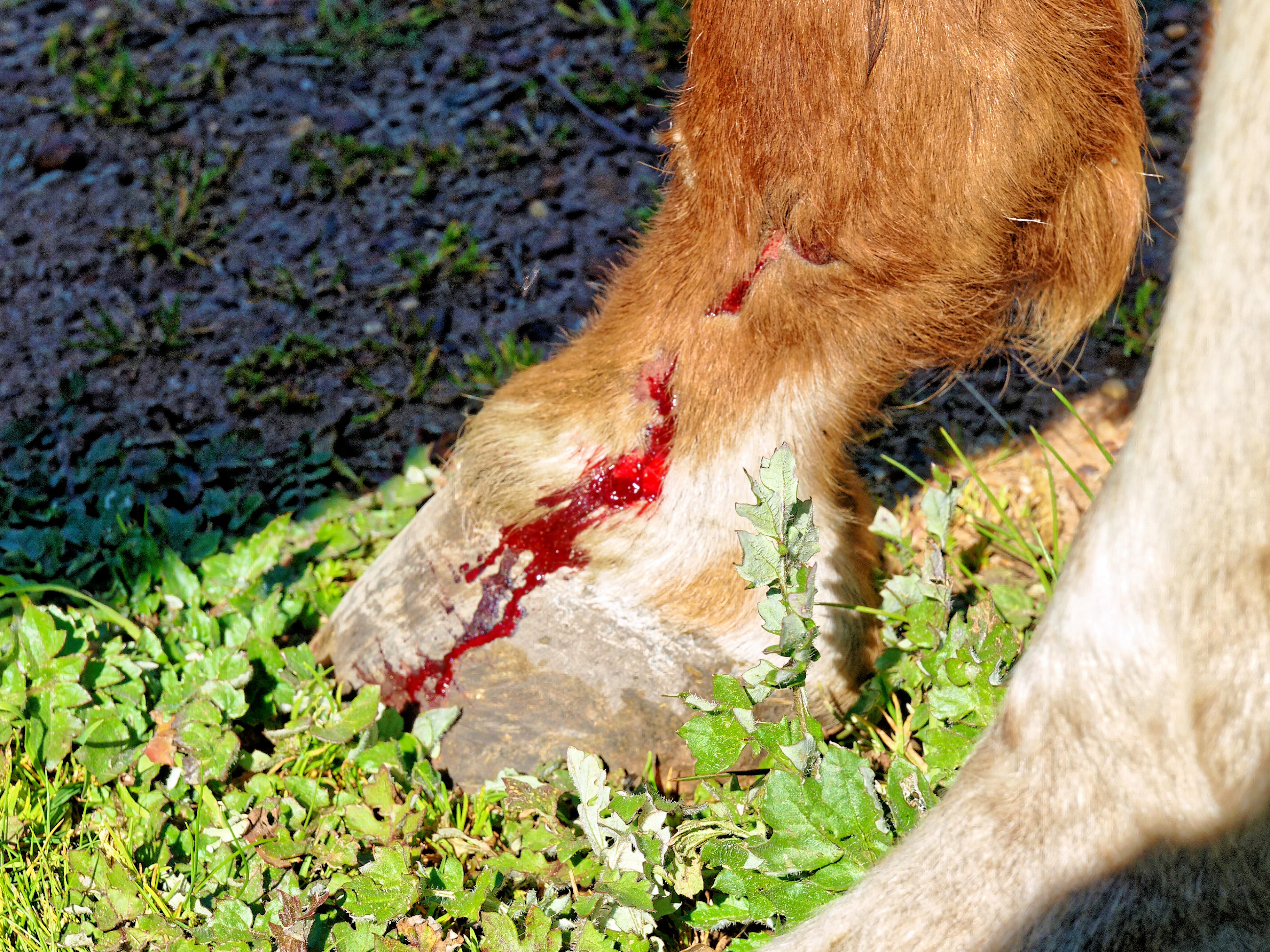
lately, but Carlos has been showing signs of sensitivity, so Yvonne tried some clip-on horse shoes for him. We can't make up our mind whether he
didn't like them, or whether it was just the spring in the air, but he wasn't much fun to
ride, and in the end we cut the ride short, mainly round the lagoon.
More backing up my photos—a total of 13 DVDs up to the beginning of the month. Well
over half of my /home file system is now taken up with photos, and it's filling up;
time for new hardware.
Keeping track of these files will be an issue. There are currently 37379 files, and the
DVDs sorted by date: the first DVD contains all the photos from 1963 to 1999, and the last
contains the photos from 18 August 2008 to 11 September 2008—what a difference in time
scale! I don't want to re-burn a DVD every time I change an old file, or scan in some
twentieth-century photos, but how to keep track of them? In the end decided to store the
file details in a database, and wrote a couple of scripts to read in the DVDs and store the
details in the database. I'm assuming that if the modification timestamp and the size
haven't changed, the file itself hasn't changed. I still need to write a script to go
through the directory hierarchy and select the files that haven't been backed up yet.
Garden work: finally weeded all the beds and mulched them. It still doesn't look much
tidier.
We had intended to continue with the verandah today, but the weather determined otherwise.
It started off mildly enough with an outside temperature of 17°, but in the course of the
day it dropped to 9°, and in the process we had 11 mm rain and lots of wind. Decided right
at the beginning to put off the work until Wednesday.
Instead, decided to think about hardware upgrades, which are becoming urgent.
My /home file system now has less than 3 GB space, and that's only a few days'
photos. But what do I buy? There are currently Samsung 1 TB drives on the market for as
little as $150, but they're all SATA, which means a new motherboard. And if I do that, I
should also restructure my office and return—after 15 years—to having only one
machine running on the desktop. That again means finding display boards to drive 5
monitors, and none of it is easy. Spent a quite frustrating time fighting the mess that the
web has become to find information on what components to buy. If I could be sure that the
hardware and software were compatible, I'd be a lot happier.
I originally entered the URL http://bibblelabs.com/, but in 2023
that currently doesn't resolve. Have they gone away? The last release was in December
2011.
It can also handle raw data—in fact, it seems to require it—and produces the
usual plethora of twisty little menus, all different. But there's a Linux version, which
also—with a bit of frobbing—works on FreeBSD, and it seems that it could do a reasonable job of fixing up photos. I
suppose I should read the documentation. Pity that it seems so expensive.
Another slow day; I should really be tidying up the place or something, but the weather was
too unpleasant, and once again I spent much of the day with the computer, trying to work out
how to use bibble. It would help greatly to
understand colour and luminance better.
The 13 mm of rain that we received yesterday helped moisten some of the weed-ridden flower
beds, and so spent some time pulling out weeds. I can see that it'll be a while before
we're rid of them.
Moore's law reversed
Also spent some time looking for new hardware. These continual lockups of the X server
on dereel make me think that the hardware is giving up the ghost. Finding new
hardware is really difficult. In particular, since 2000 I've been running one or two
monitors at 2048x1536; nowadays it's almost impossible to find anything of this resolution.
CRT monitors are pretty much dead, and LCD monitors seem to max out at the HDTV resolution,
resolution, 1920x1080 or 1920x1200. Far from increasing resolution, it's becoming difficult
to maintain the current levels. What happened to Moore's law?
That's not the only evidence I've seen of technological stagnation. Decades ago, when I
worked for Tandem Computers in Frankfurt am Main, Germany, many members of our department
used to have lunch together, usually at a nearby Greek restaurant with the unlikely name
“Talhütte”. Others complained that much information was disseminated only at
these “meetings”, and that they were being left out of the information flow.
I had just got my second laptop, an Epson Equity LT (NEC V30
CPU, 20 MB disk), and I had the idea of keeping minutes of the lunch meetings. That carried on for a week or so, while some people got
significantly annoyed about the fact that they couldn't say anything without the whole
department knowing it (or, as I recently put it, they were worried about the details
becoming available on the web decades later—hindsight is a wonderful thing).
Henrik Johansson recently became aware of these minutes and thought it would be a great idea
to apply it to the Fika (coffee
break) meetings at his
company. One difference, apart from the use of abbreviations for people's names:
Garals questions henjoh about the frantic writing on a block of paper.
It seems that he has power supply problems; we noted this twenty years ago too.
Incidentally, full marks to Epson to have
documentation on the web for a 20 year old laptop.
Woke up in the middle of the night with a throbbing foot—bloody gout again! And what
an inappropriate time, with the next stage of the verandah due in the morning. Took a
couple of pills and went back to sleep.
CJ arrived on time, and I thought we might be able to get through today's
task—erecting the three main pillars in the front, along with the beams in between
them—in a similar time to the 2½ hours it took us last
Friday. No such luck: it took all day, mainly adjusting levels. Fortunately my foot
recovered well, and by the evening there was no pain at all.
One of the mistakes I made when setting out this thing was to assume that the timber was
straight. The result were “levels” that contradicted each other, fortunately
all in the range of 1 to 2 mm. What a pity that we didn't have a laser level. We've
decided to use shims to adjust things. At least the all-important transition to the
existing deck looks right.
We're having a party on Sunday to celebrate (if that's the correct action) my 60th
birthday. That's a welcome excuse to finally make the place look a little more presentable,
though we're resigned of course to having a half-completed verandah and a cement mixer in
the garden. But we finally recharged the battery of the lawn mower and Yvonne performed the first mow of the new season.
In the meantime, I had another task: I'm putting together a second-hand computer for my
nephew Chris. What software? I don't have anything with Microsoft on it, and buying a copy
would cost more than the computer is worth. So FreeBSD, right? Well, no. My attempts years ago to have an out-of-the-box FreeBSD
desktop system never quite made it, and Chris isn't a computer expert. So, with his
agreement, I decided on an end-user Linux distribution instead. Hopefully he knows what
he's letting himself in for.
There's no shortage of such distributions; in the last few months I've had two copies of
OpenSuSE and at least one of Ubuntu 8.04. The OpenSuSE was newer, so installed
that.
The installation was easy enough, once I had got past various hardware issues, but in the
end I had a desktop that said nothing to me. A “My computer”, but no way to
administer it. In the way these Linux distributions try to emulate Microsoft, you'd expect
a “Control Panel”, but I couldn't see one. This may be the fault of KDE, and not of SuSE, but if I can't find things easily,
Chris almost certainly won't.
Never mind, I had plenty of disks, so set to installing Ubuntu as well. Didn't get finished
before evening.
Clearly the other swallows haven't been able to remove it, so they just built the nest over
it. It's also an interesting indication of how fast they put these things together. I
think the nest is now larger than the old one.
A little work in the garden, spending an inordinate amount of time weeding about 1 m² of the
north bed. In the process discovered
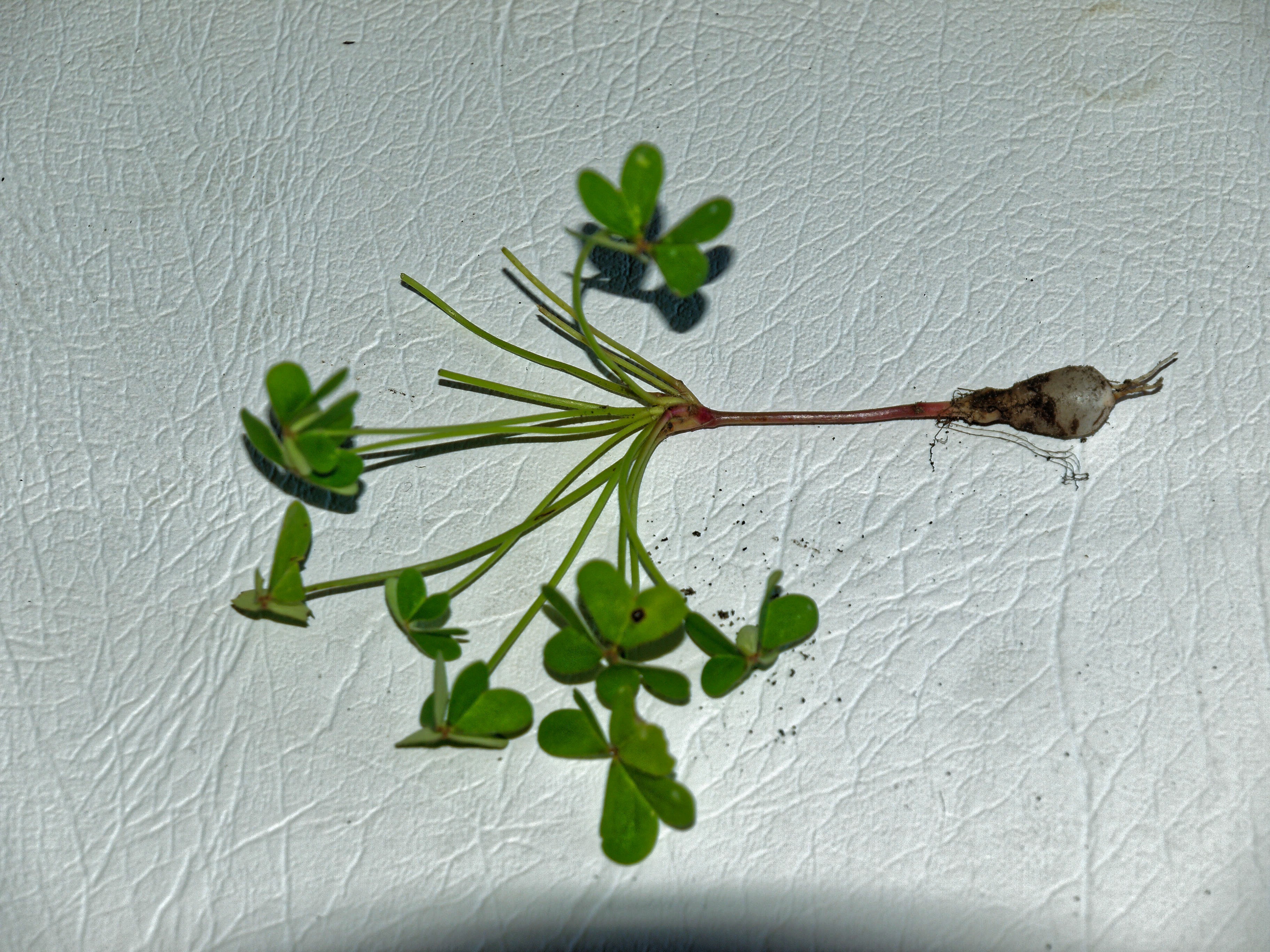
why Oxalis is so difficult to eradicate:
Normally you only get the stem when you pull one out, leaving the bulb to try again.
A couple of days ago, B&H asked me to
do a review of my new Olympus
lens—for their web site, of course. Problem: the web site they gave was broken for everything, it
seems, except Google Chrome. It issued a
redirect starting with some random junk, and everything, including Microsoft “Internet
Explorer”, treated it as binary data. It took a couple of reports to their web master
before they fixed the problem, and then I discovered that I was only allowed to add a
mini-review, without even links to the real one.
More work installing the computer for Chris. I had configured the network, and for some
reason sudo didn't want to work:
sudo: unable to resolve host chris
OK, so there really wasn't any DNS entry for chris. But why should there be? This
machine will go away on Sunday, and it'll probably end up connected to an ADSL connection.
So who cares about the machine name?
I couldn't fix the problem. I found that I could set the root password, so I did that, but
for some reason just about every command, even as user chris, did a DNS lookup and
nothing else until it timed out—even if the network cable was disconnected. Finally
gave up and modified my DNS configuration to work around the problem. But this is supposed
to be a system for end users. How would they cope?
Next, I wanted to take some screen shots, which involved putting an xv on the
screen—but X was started with this horrible -nolisten tcp option. I've been
there before with startx, but this was with gdm. Found a reference to the
issue in /etc/gdm/gdm.conf:
# If true this will basically append -nolisten tcp to every X command line, a
# good default to have (why is this a "negative" setting? because if it is
# false, you could still not allow it by setting command line of any particular
# server). It's probably better to ship with this on since most users will not
# need this and it's more of a security risk then anything else.
# Note: Anytime we find a -query or -indirect on the command line we do not add
# a "-nolisten tcp", as then the query just wouldn't work, so this setting only
# affects truly attached sessions.
DisallowTCP=true
That's clear enough—or is it? If it's not true, what is it? false?
Nothing at all? Whole entry commented out? I tried both of the latter to no avail, noting
only that you only have to change this file for gdm to crash. Then I went searching
the entire file system for the text nolisten, and apart from here only found
it in /usr/sbin/gdm.
Ended up giving up and manually editing the binary of gdm, but that didn't work too
well either. I was able to start X without -nolisten tcp, but for some reason it
came up in “safe” mode. Probably not the problems that Chris wants.
Yana and Diane Saunders came in from South Australia in the evening in preparation for the
party on Sunday.
After my lack of success with the X display on Chris' computer yesterday, decided to play it
safe and, contrary to my normal rules, reinstall Ubuntu. In the process, while writing my diary, it occurred to me that there was one
version of the configuration I hadn't tried. As I wrote yesterday:
If it's not true, what is it? false? Nothing at all? Whole entry
commented out? I tried both of the latter to no avail ...
So if you exclude the obvious, the non-obvious must be correct, right? Yes! The correct
entry is:
DisallowTCP=false
No thanks to the documentation.
On this installation, the screen resolution changed. Previously it had started up in some
high-res mode that blew the mind of the graphics card and made it produce flimmering
artefacts that only went away at lower resolutions. This time round, it came up in 800x600
mode (and at 60 Hz vertical refresh!) and refused to go higher. The background? This time
I had installed it with the correct monitor (an ancient ADI 5D without EDID), and so,
instead of asking, it just guessed that the monitor couldn't do more than 38 kHz horizontal
frequency and stuck to that. Got round that one with a remnant of bygone times. These are
the correct values from the product manual:
Then it found hundreds of megabytes of updates, in fact about 286 MB, quite a considerable
proportion of size of the original CD, and proceeded to download them from the
“nearest” mirror, in Sankt Peterburg, bringing the data two-thirds of the way around the world. Another
case of trying to be too clever: clearly it thought the computer was in Germany.
Somehow, that worries me. If there's been some exploit, it would be nice to know what it
was.
The good news is that the systems recognizes all our digital cameras out of the box,
including Yana's two Canons and even the raw format of my
Olympus E-510. That's quite a difference from all other systems I've used, most certainly
from Microsoft. One point to Ubuntu.
Finally finished that and did some work in the garden. The whole month has been
particularly cool, but yesterday and today were exceptions, and the today we hit 25°. The
trees have taken notice:
Sixty years old! How did that happen? Now I'm officially an old fogey. And to add to the
nonsense, I celebrated it.
My uncle Max, wife Margaret, son Mick and my aunt Audrey came along, Max bearing gifts. I
had asked for a Platycerium (staghorn
fern) and another cutting of the hibiscus that I took
a couple of months ago, and which hasn't really taken.
But then he brought a considerable addition to my plant collection: apart from four kinds
of Pelargonium, another strawberry
plant, two tomato plants and a raspberry plant, also a couple
of Callistemon of unspecified nature,
a Clivia (presumably
a Clivia nobilis),
a Daphne, a
Nandina domestica, something that we
thought was a Croton, but
which is probably a Codiaeum variegatum, an Acer palmatum (Japanese maple), and a tree identified as and an ornamental cherry
tree, which apparently means the Japanese flowering cherry. Many of the
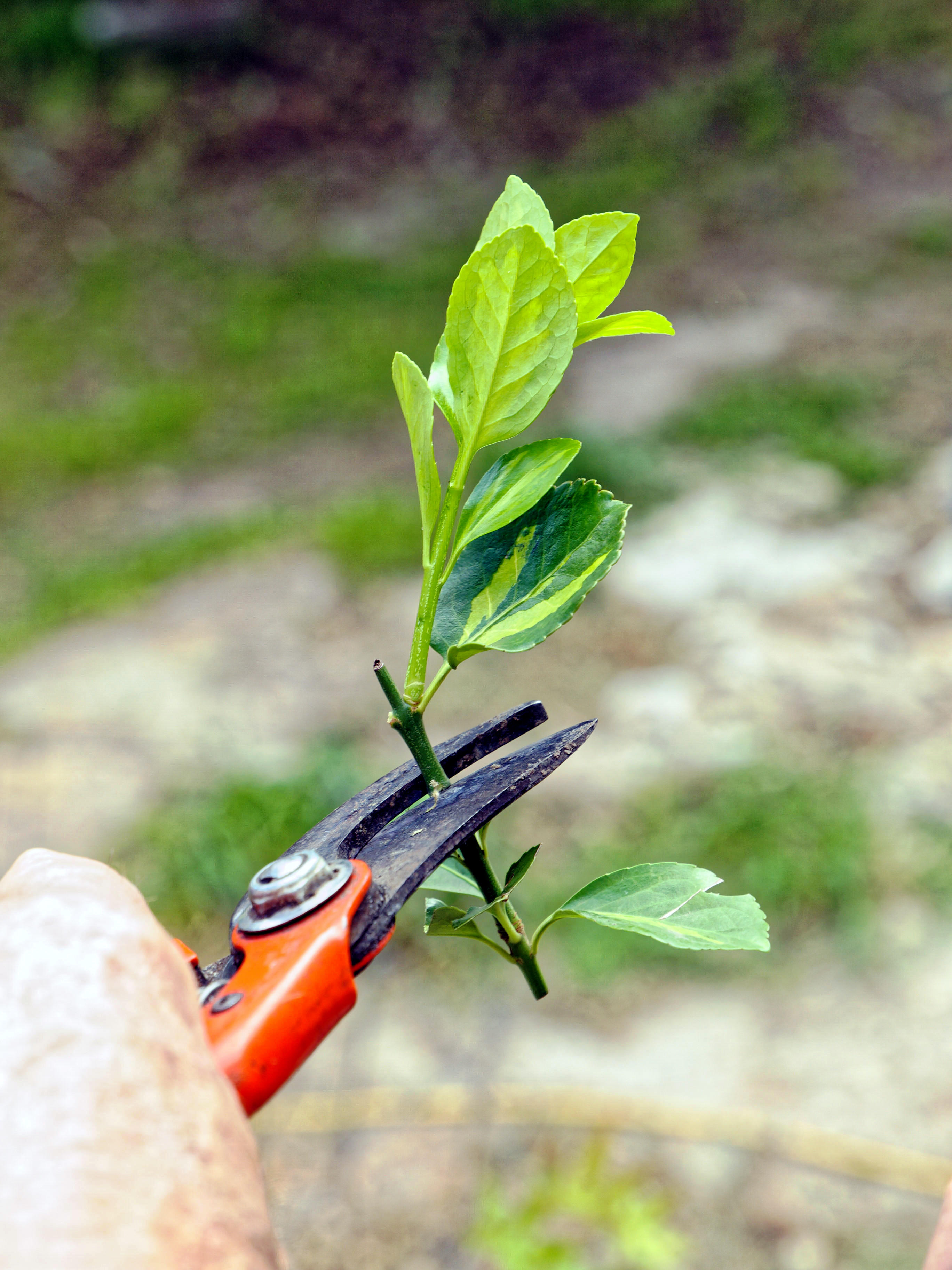
smaller things were cuttings, and we spent a hurried half hour watching Max putting them
into pots at lightning speed. throwing in some cuttings from a
nearby Grevillea for good measure:
We were supposed to continue with the verandah today, but it started raining, and it
occurred to me that I had enough other stuff to do. Called up CJ and left a message on the
answering service, but he showed up anyway, so we got him to take the cement mixer to the
Yeardleys and put the rest off until tomorrow.
I was right in my assessment: apart from the less than suitable weather, I had plenty of
other work to do, and was rotating most of the day. Spent some time identifying the
plants—there's more material for my mystery plants collection there—and planted a couple. The real issue is that
some of the plants are big—the Japanese Maple for example—and
we need to think where to put them.
Also thinking about a new machine, and discovered that I gave away my last spare computer
case yesterday. Should I choose something smaller this time? It looks as if the biggest
disadvantage of a 1 TB disk is backing it up, so it'll probably make more sense to choose a
couple of 500 GB drives.
CJ and Sue along this morning to help with the verandah. I've identified my issues with the
construction: if I work all day on it, I don't have time for other things I want to do.
Today discussed it with the others, and they agreed that they'd rather only do half a day at
a time, so today we only did 3½ hours work (should have been 4, but 3½ proved to be a
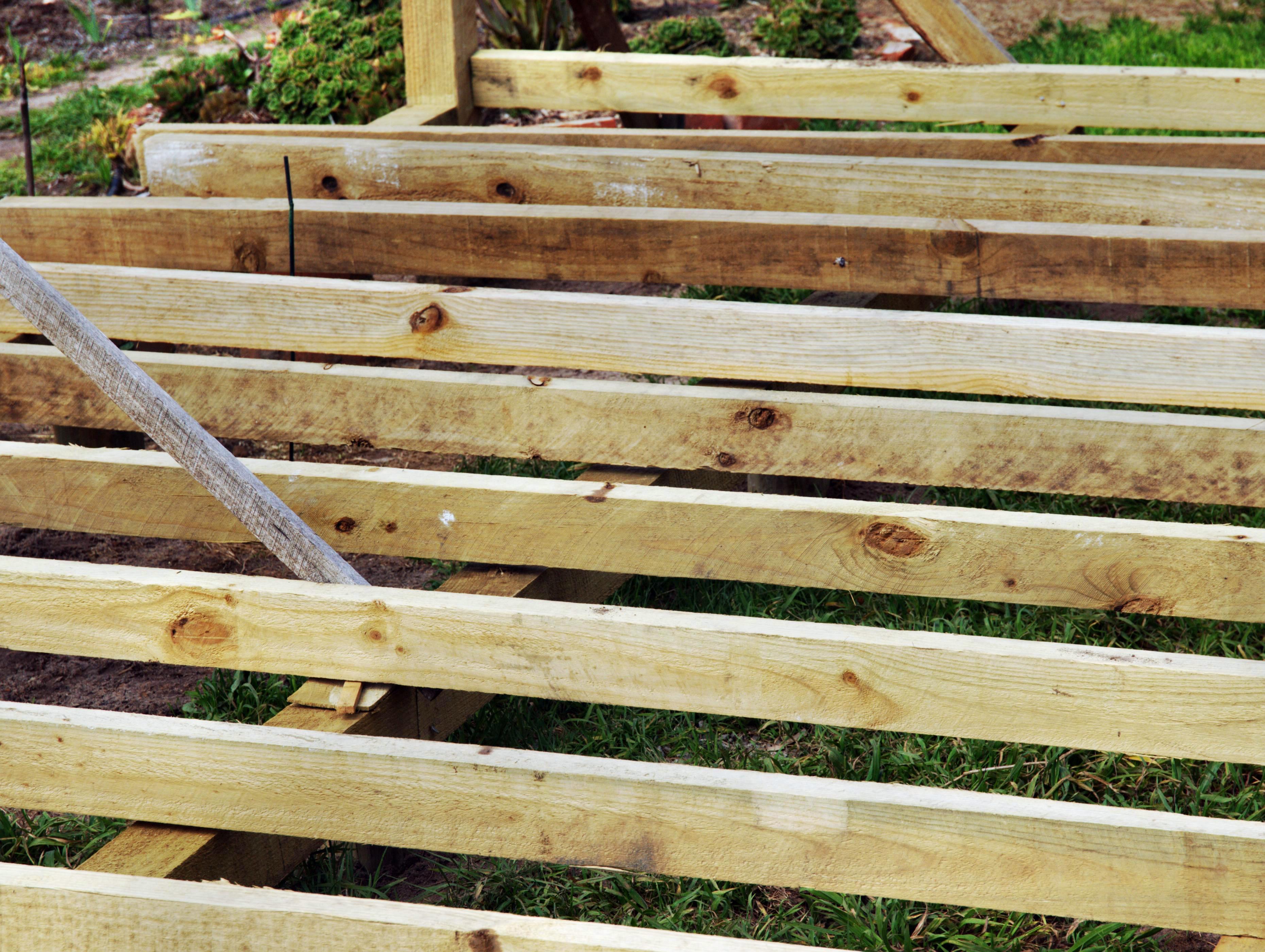
convenient point to stop). Spent most of that time trying to align joists and bearers, some
of which don't quite line up:
In the afternoon, used most of my new-found spare time searching for hardware for my new
machine. It's becoming fairly clear what hardware I need now, but the price differences
between the suppliers are enormous. For two 1 GB PC-6400 DDR-2 memory chips I can pay
between $41.18 and $90.09, apparently without any quality difference. A 1 TB disk from
Samsung costs between $150 and $207. But who are the cheap suppliers? Do they have the
stuff in stock? What about shipping? Many questions to ask and broken web sites to search
for the answers. The following real life mail is indicative (I've just reformatted the
upside-down reply for intelligibility):
> Hi AusPC,
>
> Groggy wants to know about OC-ZT-85TEG2P-FSL.
>
> http://www.auspcmarket.com.au/show_product_info.php?input[product_code]=OC-ZT-85TEG2P-FSL
>
> They ask :-
>
> Does this card come with DVI/VGA converters?
I don't have one in stock at the moment to confirm, but most video cards
come with at least one.
Isn't that helpful?
To the Yeardleys for dinner. David is off to Ukraine tomorrow, as he discovered yesterday,
apparently to dismantle a ship and transport the parts up some small canal to an inland sea.
I'm reminded of the children's song “The big
ship sailed up the alley-alley-ay, on the last day of September”.
Do you have a comment about something I have written? This is a diary, not a
“blog”, and there is
deliberately no provision for directly adding comments. It's also not a vehicle
for third-party content. But I welcome feedback and try to
reply to all messages I receive. See the diary overview for more details. If you do
send me a message relating to something I have written, please indicate
whether you'd prefer me not to mention your name. Otherwise
I'll assume that it's OK to do so.